



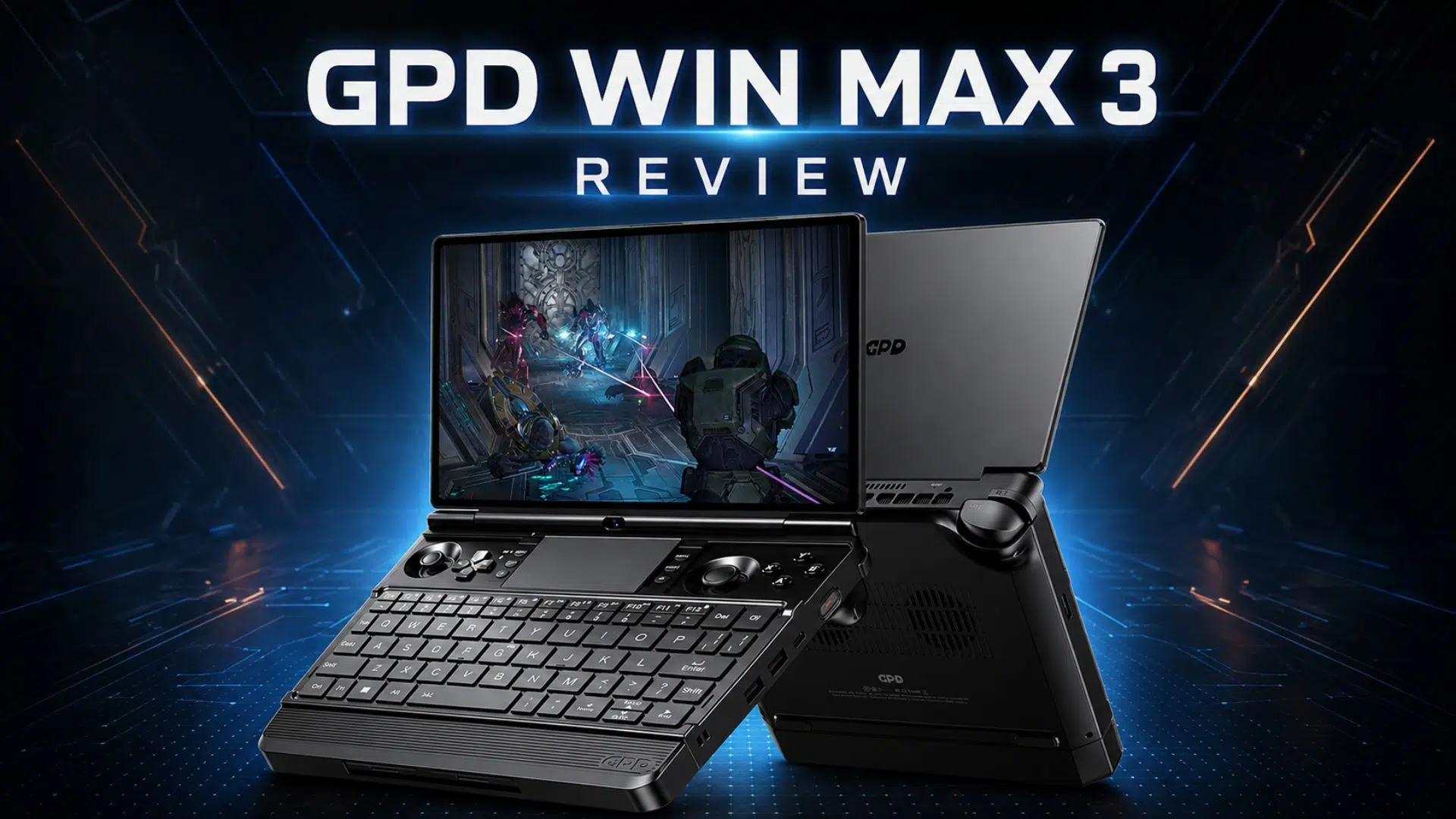
What is the GPD WIN MAX 3?
The GPD WIN MAX 3 is a Windows handheld gaming laptop that combines built-in game controls, a full keyboard, a 9.06-inch AMOLED touchscreen and AMD Ryzen AI Max+ processors. This review focuses on the Ryzen AI Max+ 388 model, Radeon 8060S graphics, 165Hz display, detachable power and cooling options, gaming performance, emulation and everyday laptop use.
The GPD WIN MAX 3 is a substantial redesign of the WIN MAX 2 concept. It brings the flexibility of a GPD handheld gaming PC together with a compact laptop layout, while the Ryzen AI Max+ platform delivers a significant increase in performance for modern games, demanding applications and emulation.
The review sample is pre-production hardware, so the results should not be considered final retail figures.
Testing conditions
- Device: GPD WIN MAX 3 pre-production review unit
- Reviewed processor: AMD Ryzen AI Max+ 388, 8 cores / 16 threads
- Graphics: AMD Radeon 8060S integrated graphics
- Display: 2400×1504, up to 165Hz
- Operating system: Windows 11
- System benchmarks: 80W TDP unless otherwise noted
- Gaming comparisons: 1080p at 75W unless otherwise noted
- Additional gaming: 2400×1504 native resolution using the settings listed in each section
- Battery test: 45W TDP limit on battery, full brightness, Cinebench loop
- Testing status: Pre-production system; retail firmware, drivers and power limits may change
GPD WIN MAX 3 Review Video
GPD WIN MAX 3 overview
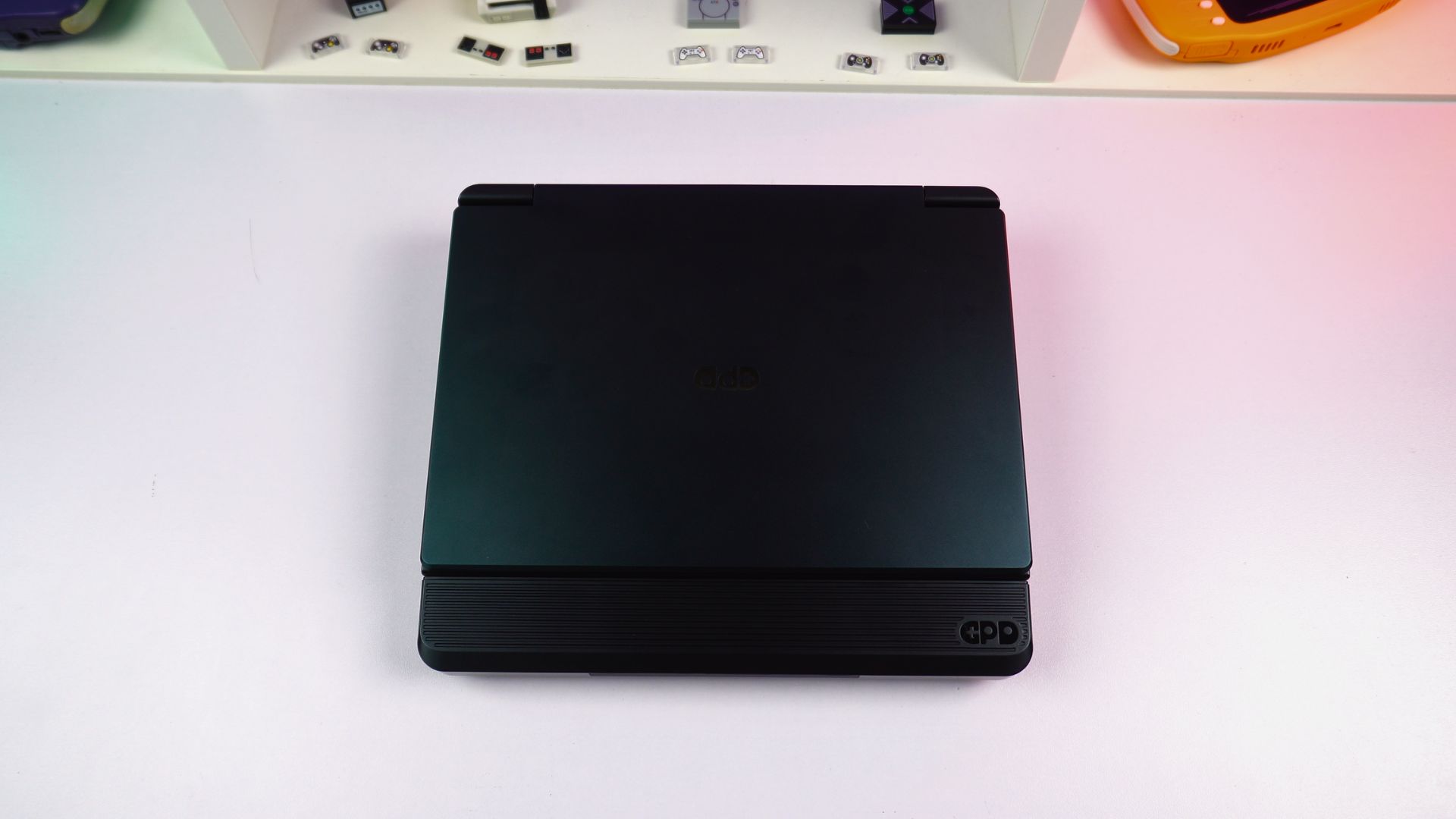
The GPD WIN MAX 3 measures approximately 8.14 × 5.78 × 1.33 inches, or 207 × 147 × 34mm, without a module. With a module fitted, it is approximately 8.14 × 7.08 × 1.33 inches, or 207 × 180 × 34mm. Weight is around 815g (1.79lbs) without a module, 1.2kg (2.69lbs) with the battery module and 959g (2.11lbs) with the fan module.
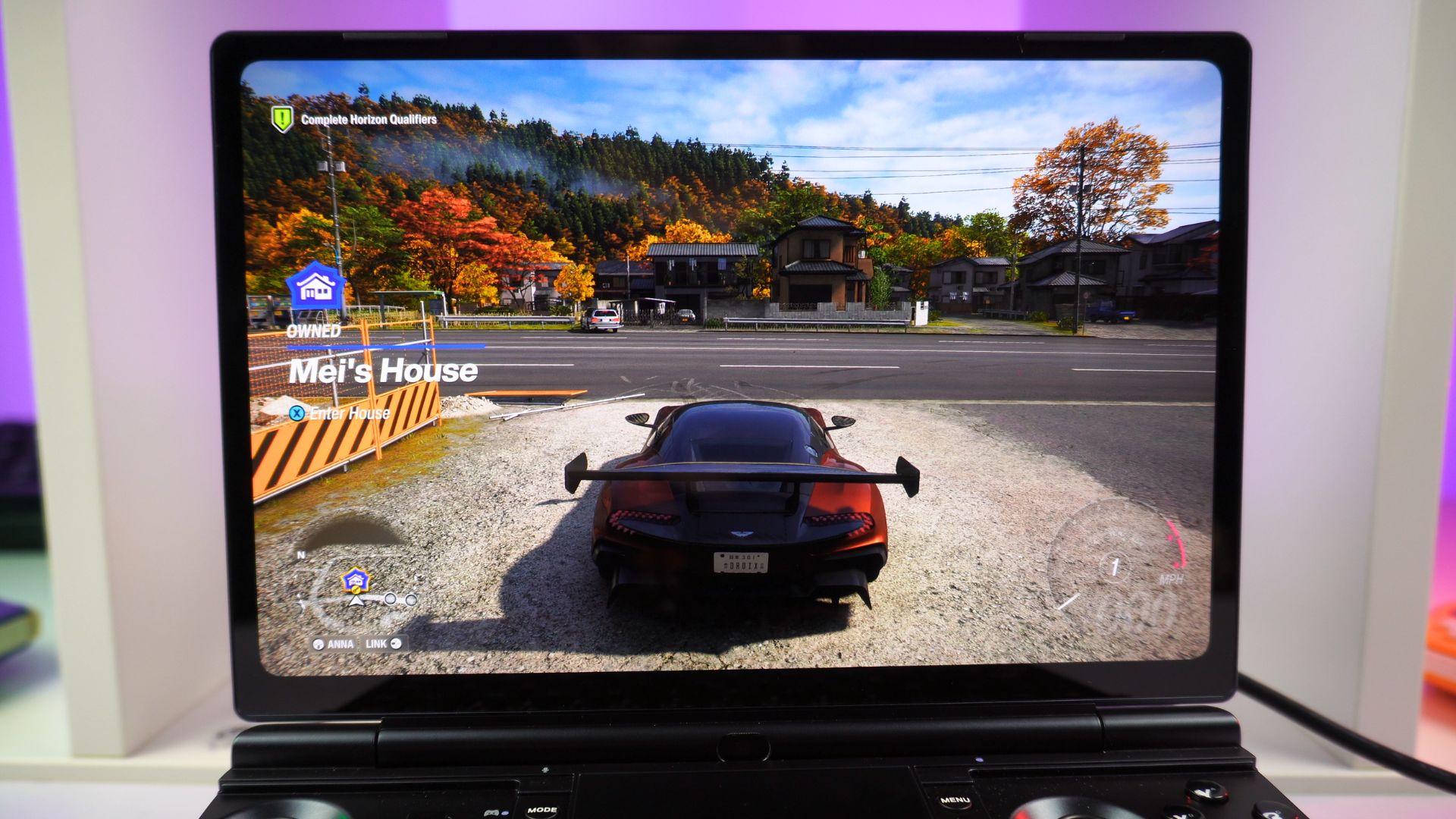
The lid opens onto a 9.06-inch AMOLED touchscreen with a 2400×1504 resolution and curved edges. Refresh-rate options include 60Hz, 120Hz, 144Hz and 165Hz, and the panel produces a bright, colourful image with the deep blacks associated with AMOLED technology.
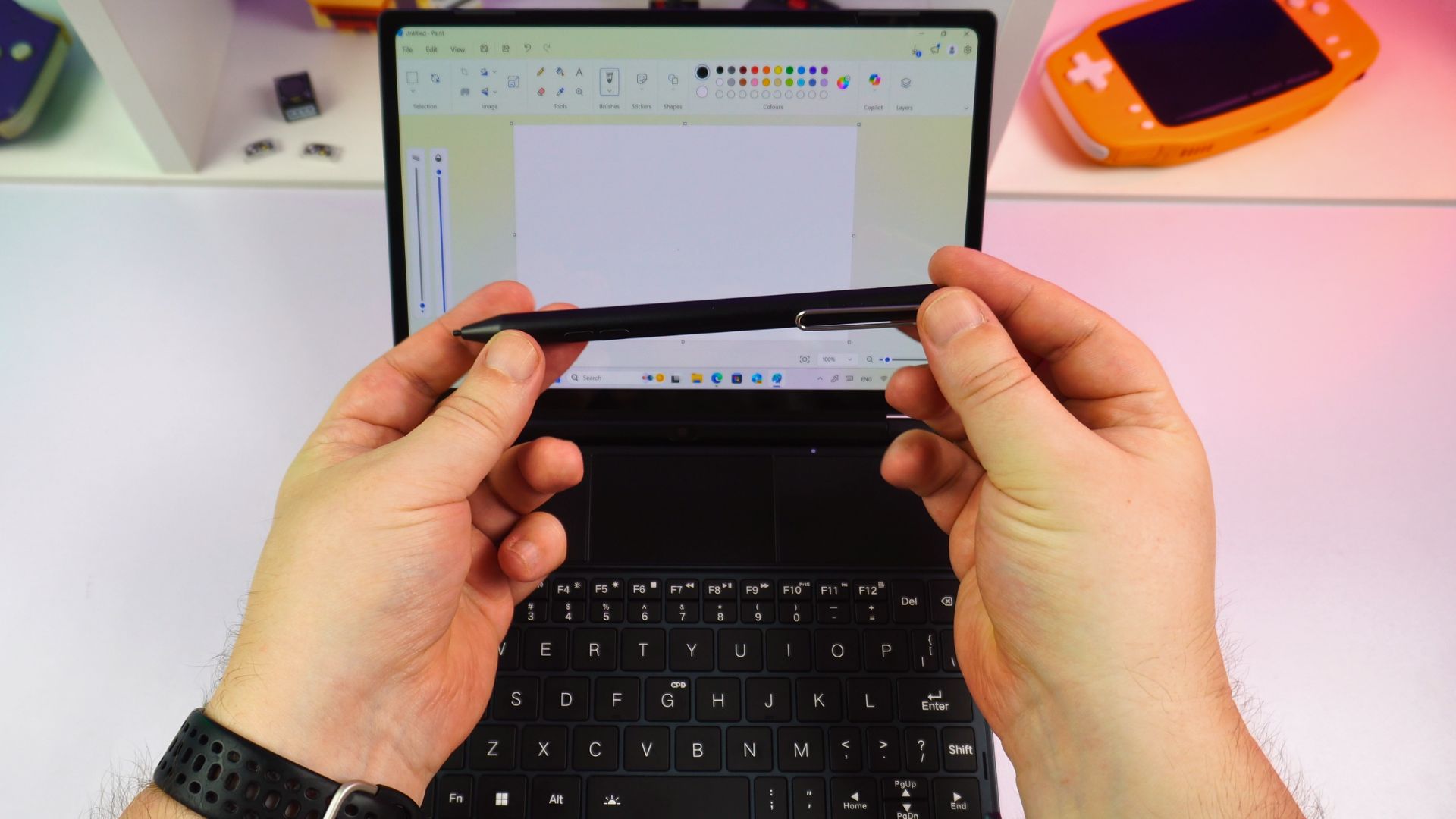
Active-stylus support provides 4,096 pressure levels and compatibility with the Surface Pen. It is useful for handwriting, notes and document work, although my own artistic efforts remain questionable.
An ultra-wide camera is positioned on the hinge for video calls. It is a 5MP camera with a listed maximum resolution of 2592×1944, giving the system a practical webcam for meetings and casual video conferencing.
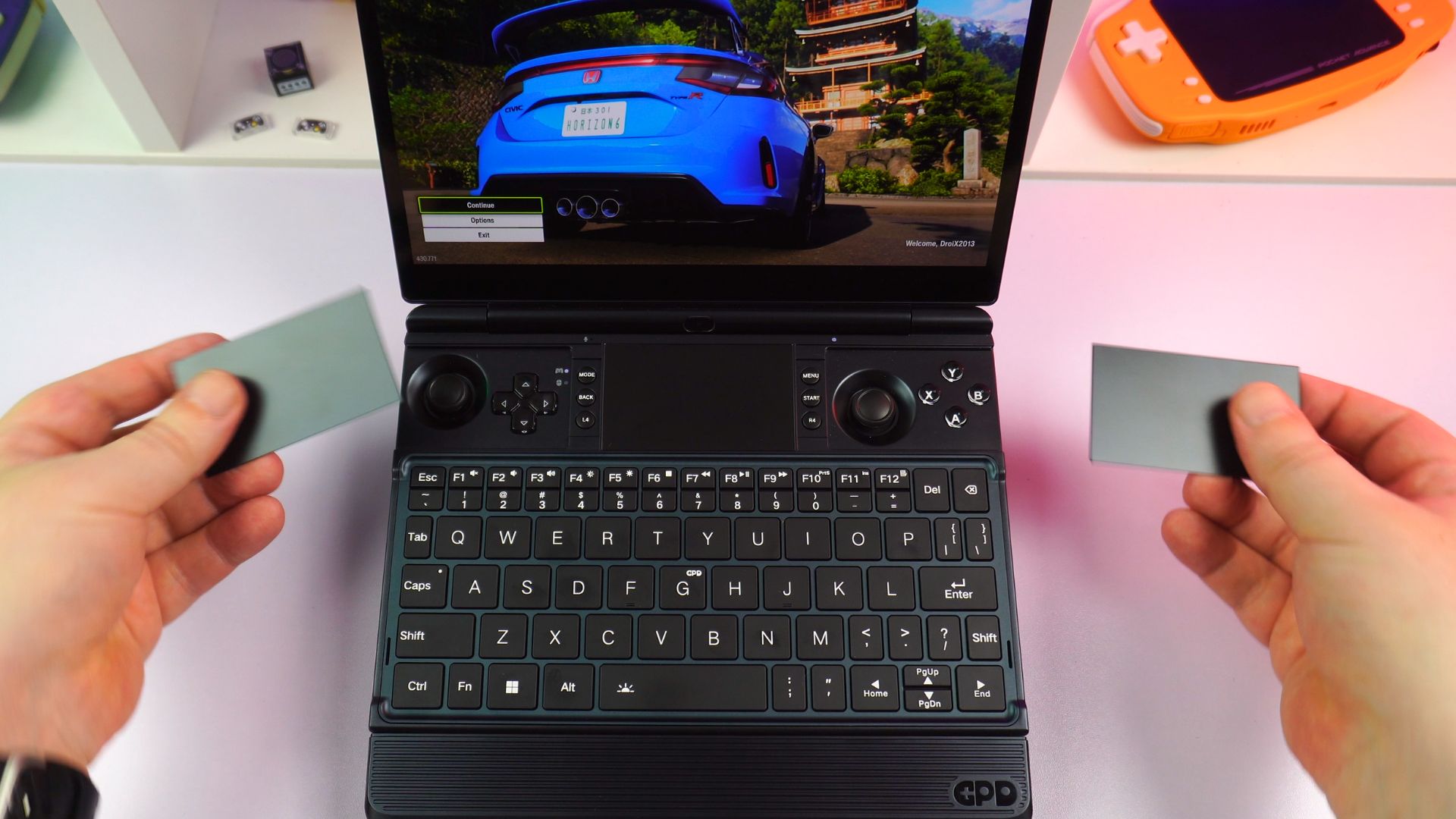
Like the GPD WIN MAX 2, the WIN MAX 3 has covers for hiding the gaming controls. This makes the device more discreet in a work environment, while the covers can be stored in the front of the modules when not in use.
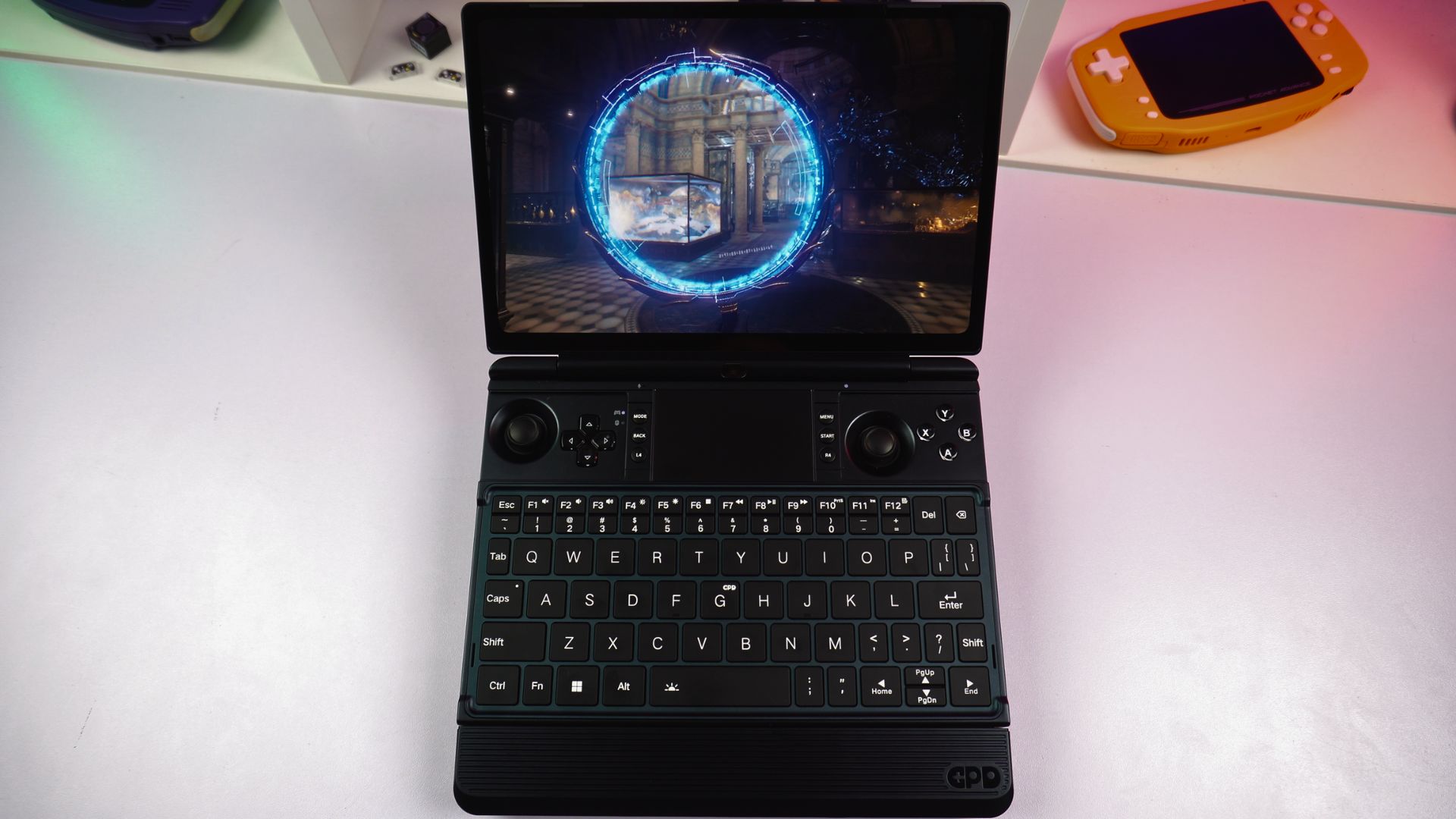
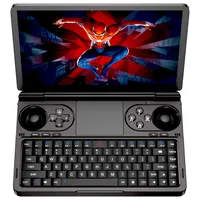
The controller area includes dual capacitive analogue sticks, a D-pad and the main gaming buttons. Around the touchpad are controls for opening GPD Tool, Select, the Xbox Game Bar menu, Start and two macro buttons.
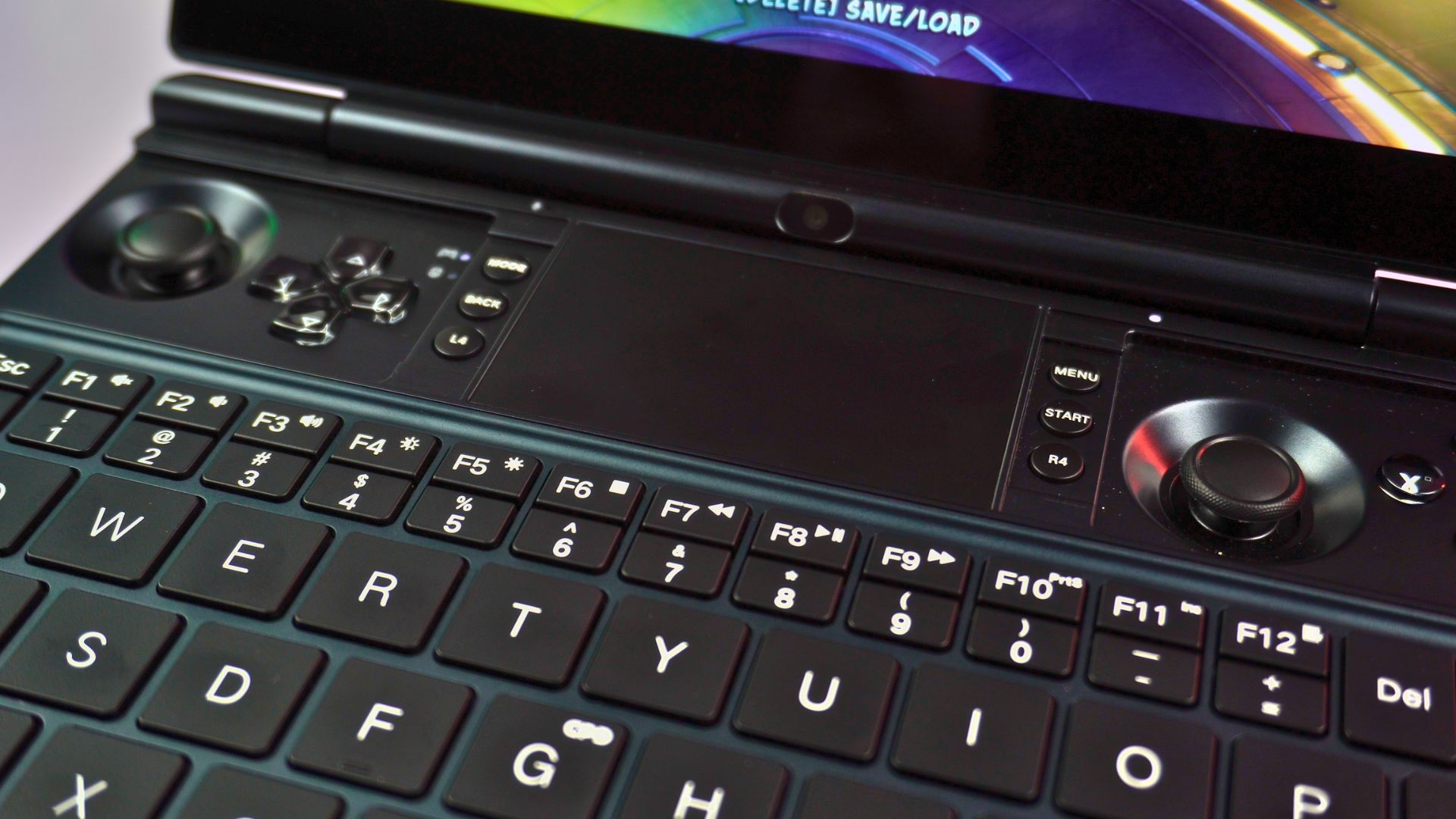
The touchpad supports Microsoft Precision Touchpad mode and four-finger gestures. It is compact, but it makes navigating Windows more natural than using the right stick for every desktop task.
The chiclet keyboard has a backlight with two brightness levels and an off setting. For a device this compact, the layout is comprehensive: the main character keys are close to normal laptop size, with smaller function and secondary keys. I wrote this review using the keyboard and had no problems with it.
The left edge houses a full-size HDMI 2.1 FRL port. This is useful for work as well as gaming, since the handheld can connect directly to a larger monitor or television.
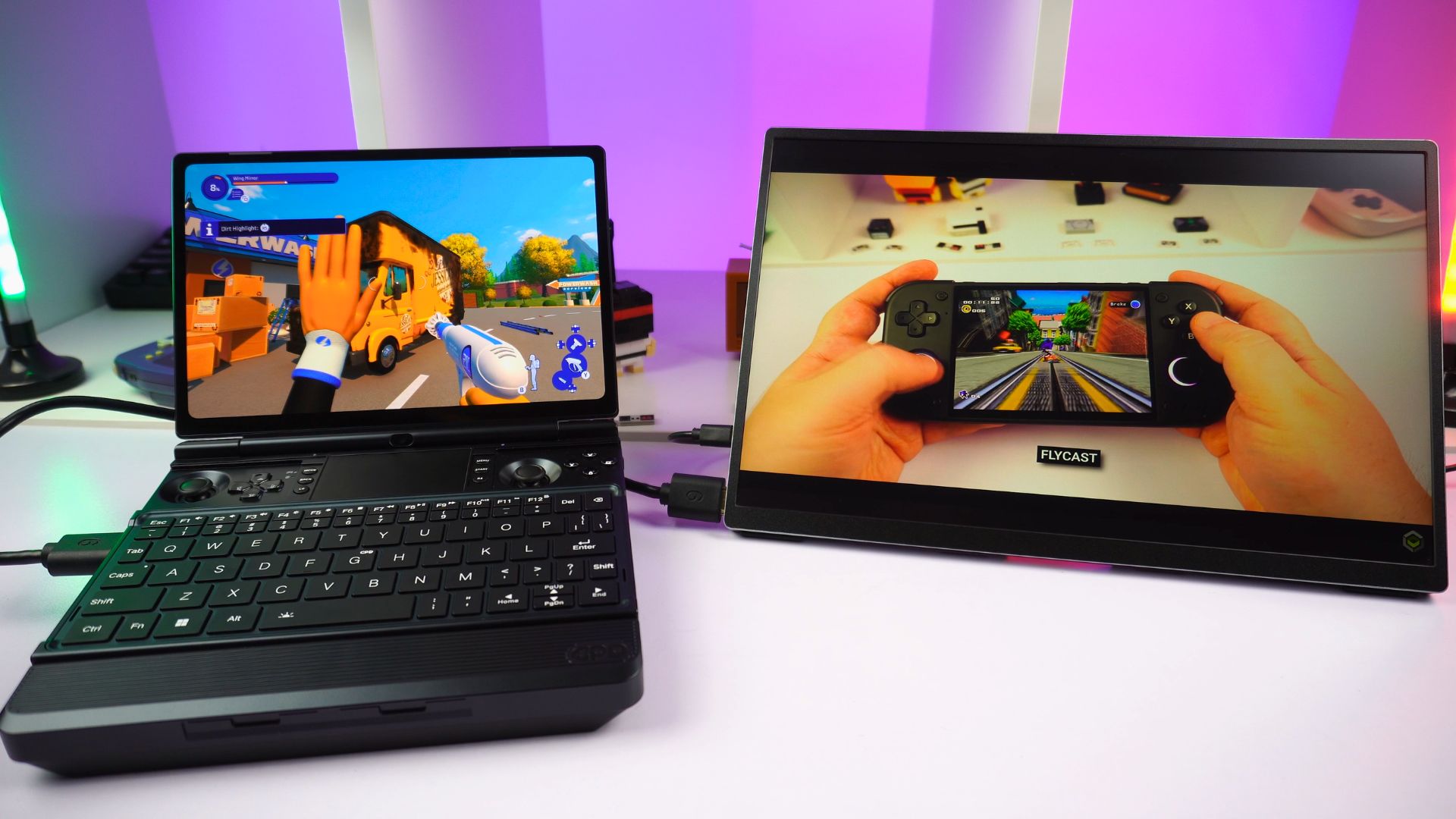
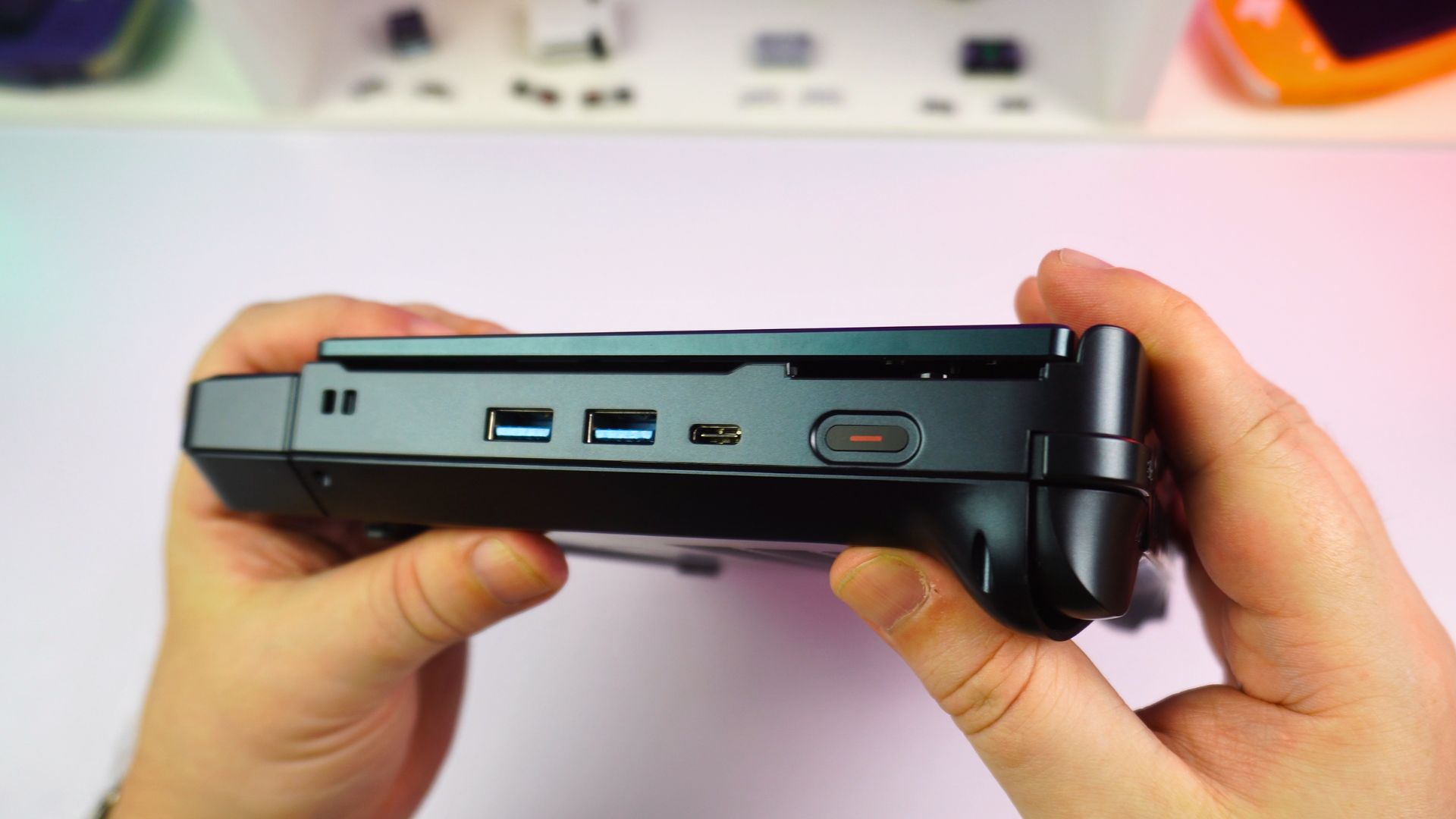
On the right are two USB 3.2 Gen 2 Type-A ports and one USB 3.2 Gen 2 Type-C port, followed by the power button and its integrated fingerprint sensor. The fingerprint reader provides a convenient way to unlock Windows.
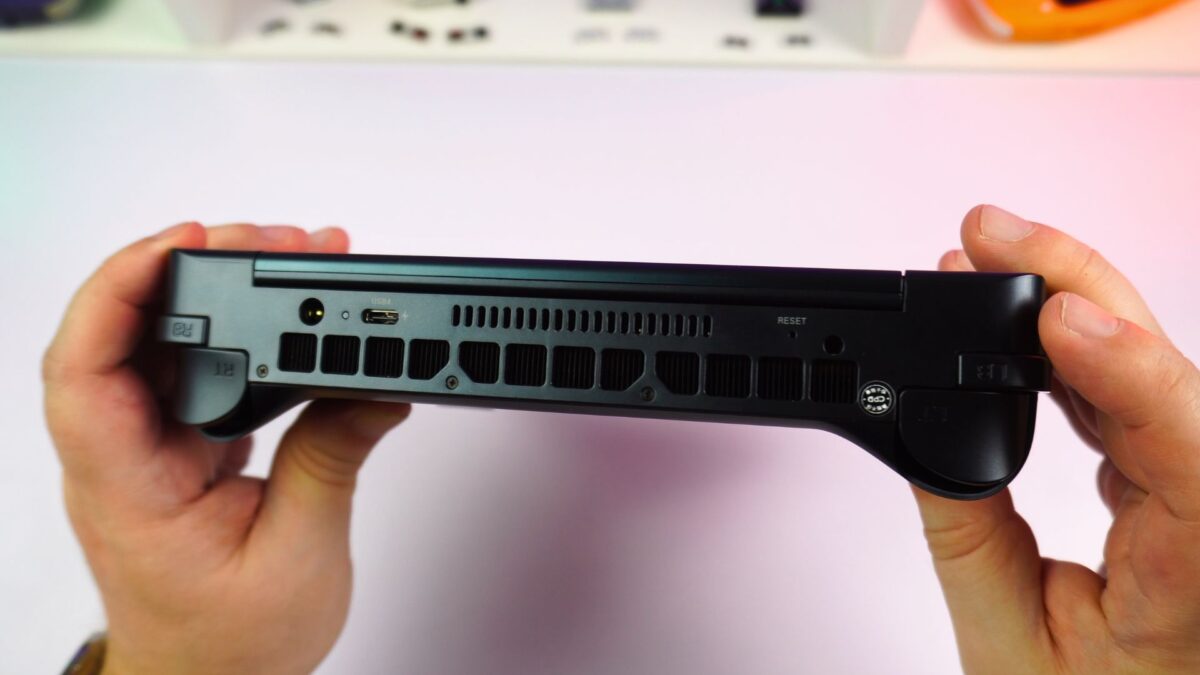
At the rear is a DC barrel jack for power and a USB4 Type-C port. The USB4 connection supports PD 3.0 fast charging and DisplayPort 2.1 video output up to 8K at 60Hz, as well as high-speed dock and external-graphics connectivity.

GPD WIN Max 3
Windows Handhelds
Processor ModelRyzen™ AI Max+ 388
Memory / Capacity32GB
Storage / Capacity1TB



 on 4 stores
GPD WIN MAX 3 modules
The module system is one of the first things that distinguishes the GPD WIN MAX 3. Modules connect to the front edge, with the principal option being the exchangeable battery module. This is particularly useful for travel if you have a spare battery ready for longer sessions away from a charger.
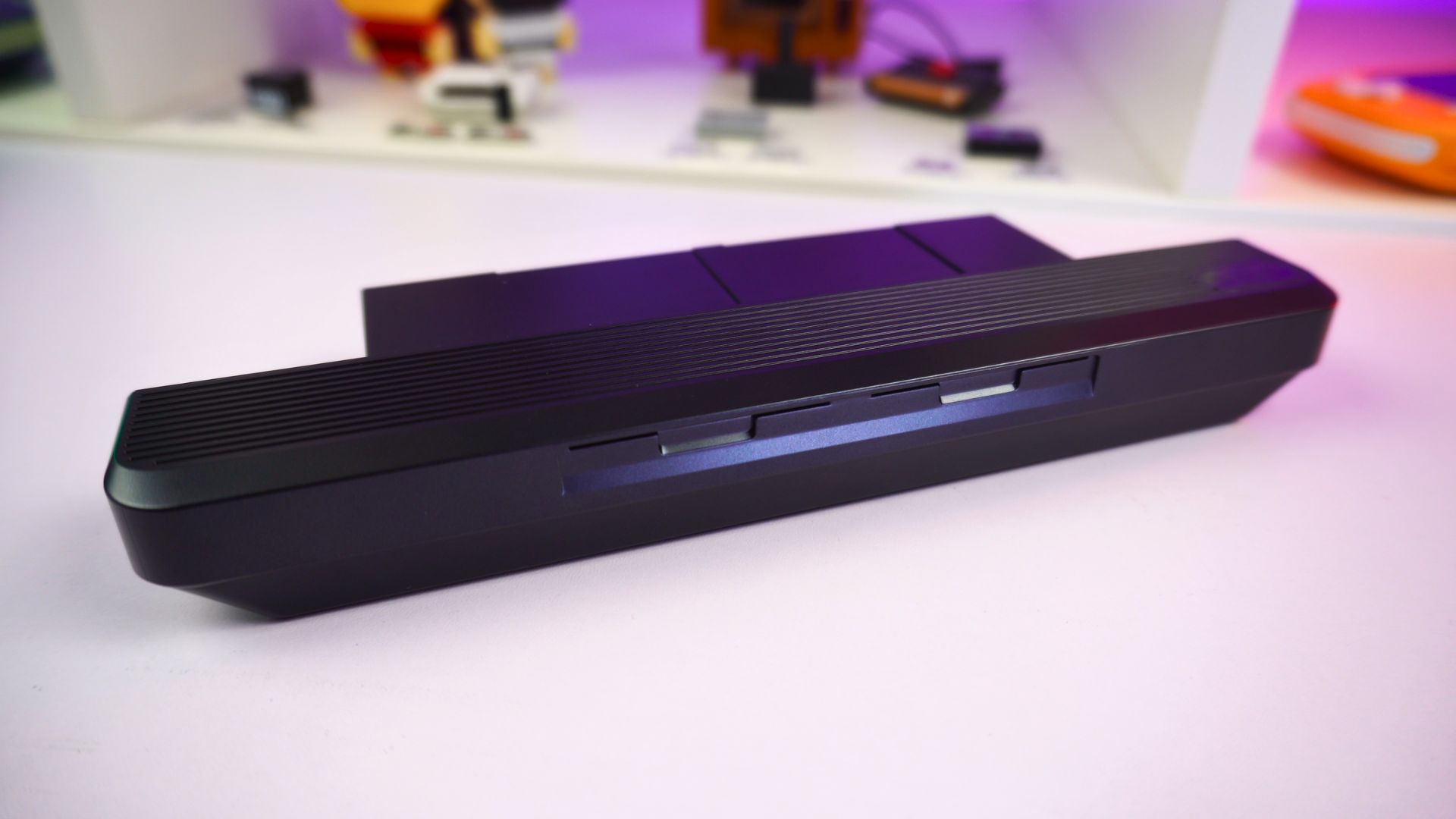
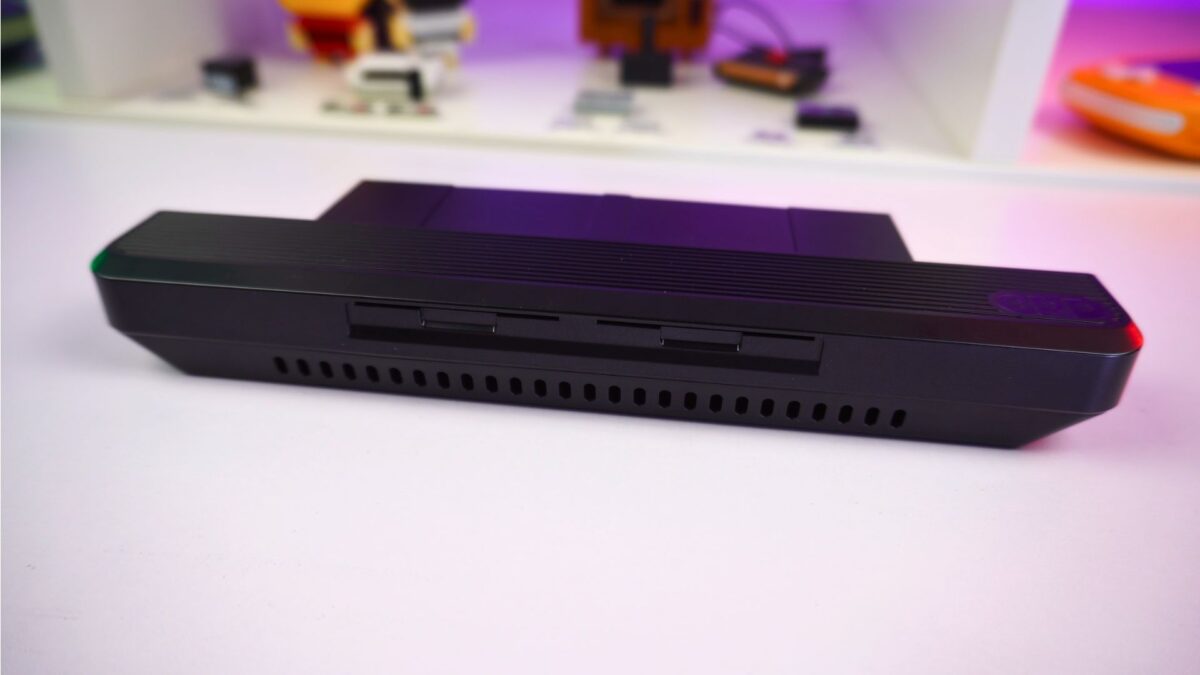
A separate fan module is available for mains-powered use. It adds cooling capacity and is intended for users who want to maintain higher power levels during extended gaming or other demanding workloads.
The modules use strong magnets for attachment. I expected them to be easy to knock loose, but they need a reasonable amount of force to remove after installation. During normal use, there is no obvious risk of them disconnecting accidentally.
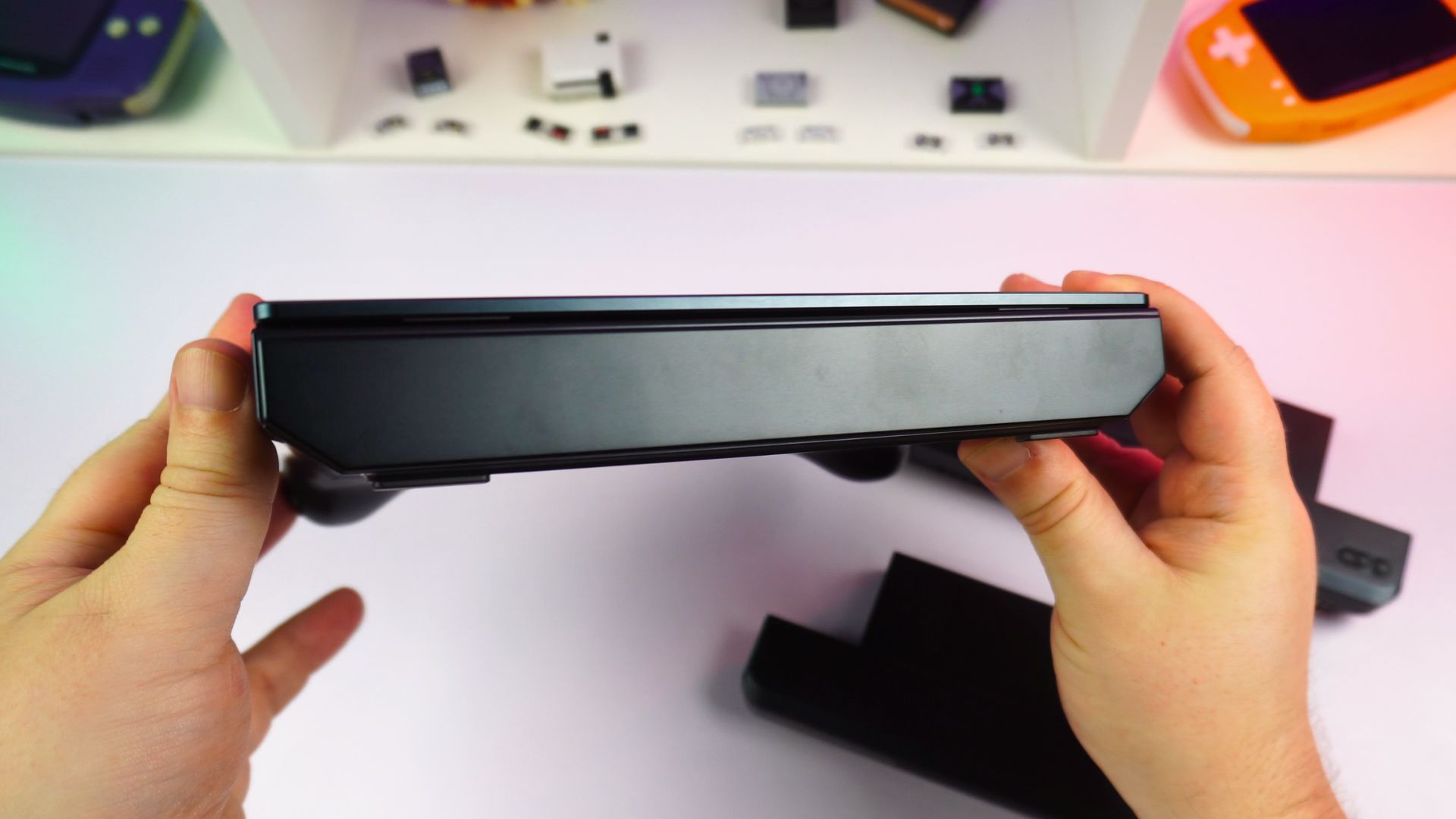
A cover for the module slot is supplied for times when neither the battery nor fan module is installed. It keeps the front of the device neat and protects the connection area.
GPD WIN MAX 2 and WIN MAX 3 compared
The GPD WIN MAX 3 has a smaller footprint than the WIN MAX 2, although the attached modules make it deeper. The WIN MAX 2 in the supplied comparison measures approximately 8.9 × 6.2 × 0.9 inches, or 22.7 × 16 × 2.3cm, and weighs around 1,098g (2.42lbs).
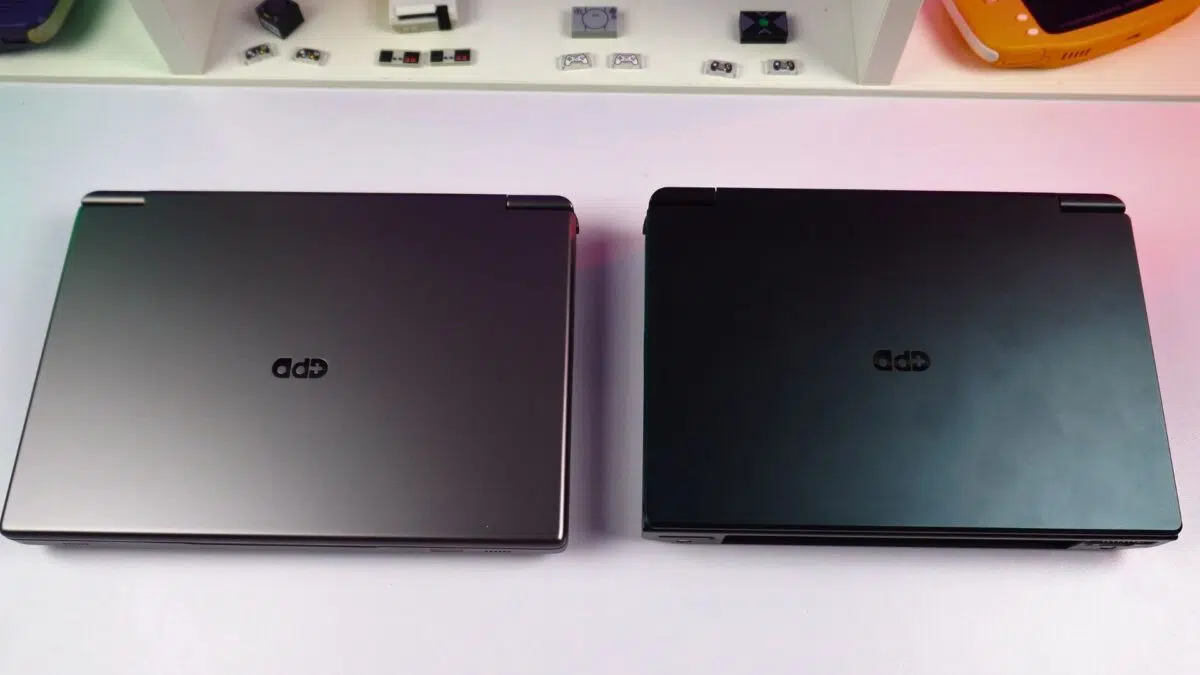
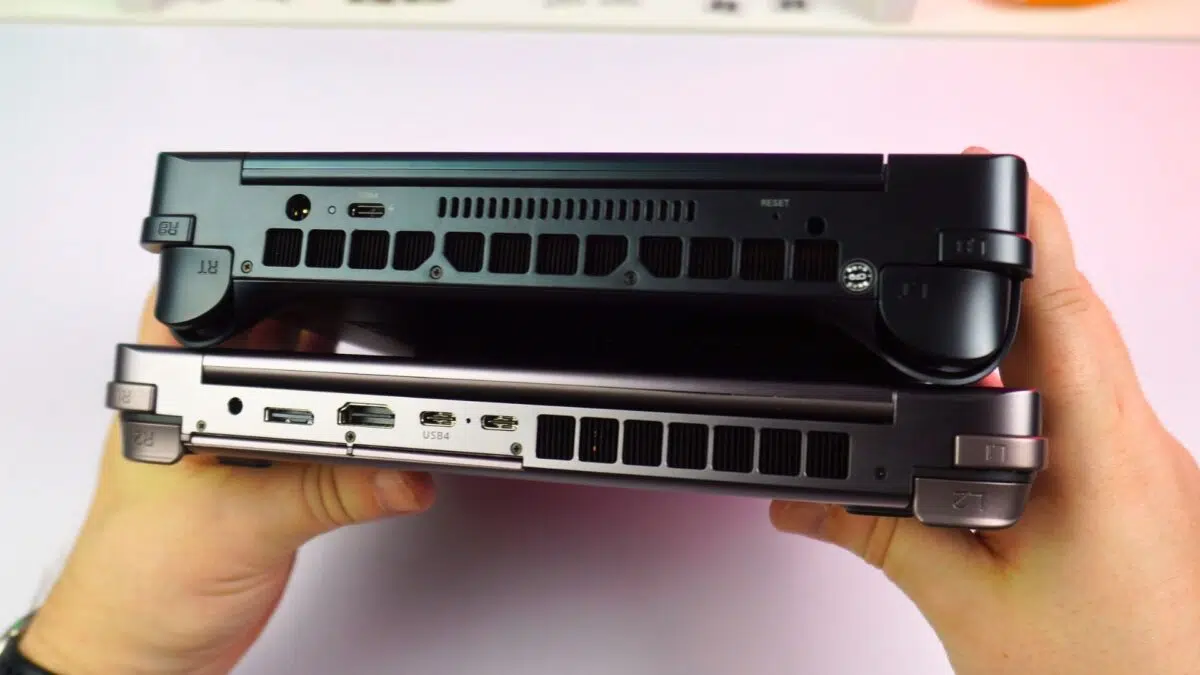
Much of the size difference comes from the WIN MAX 2’s larger 10.1-inch display compared with the 9.06-inch panel in the MAX 3. The older device uses an LCD, while the new model upgrades to AMOLED and a much faster refresh rate.
The MAX 2 keys are stated to be 0.02mm smaller than the MAX 3’s 14.4mm keys, which makes very little difference in practice. Both models offer broadly similar USB, HDMI and removable-storage connectivity, but the extra SSD slot is internal on the MAX 3 rather than exposed through the small covered bay used by the MAX 2.
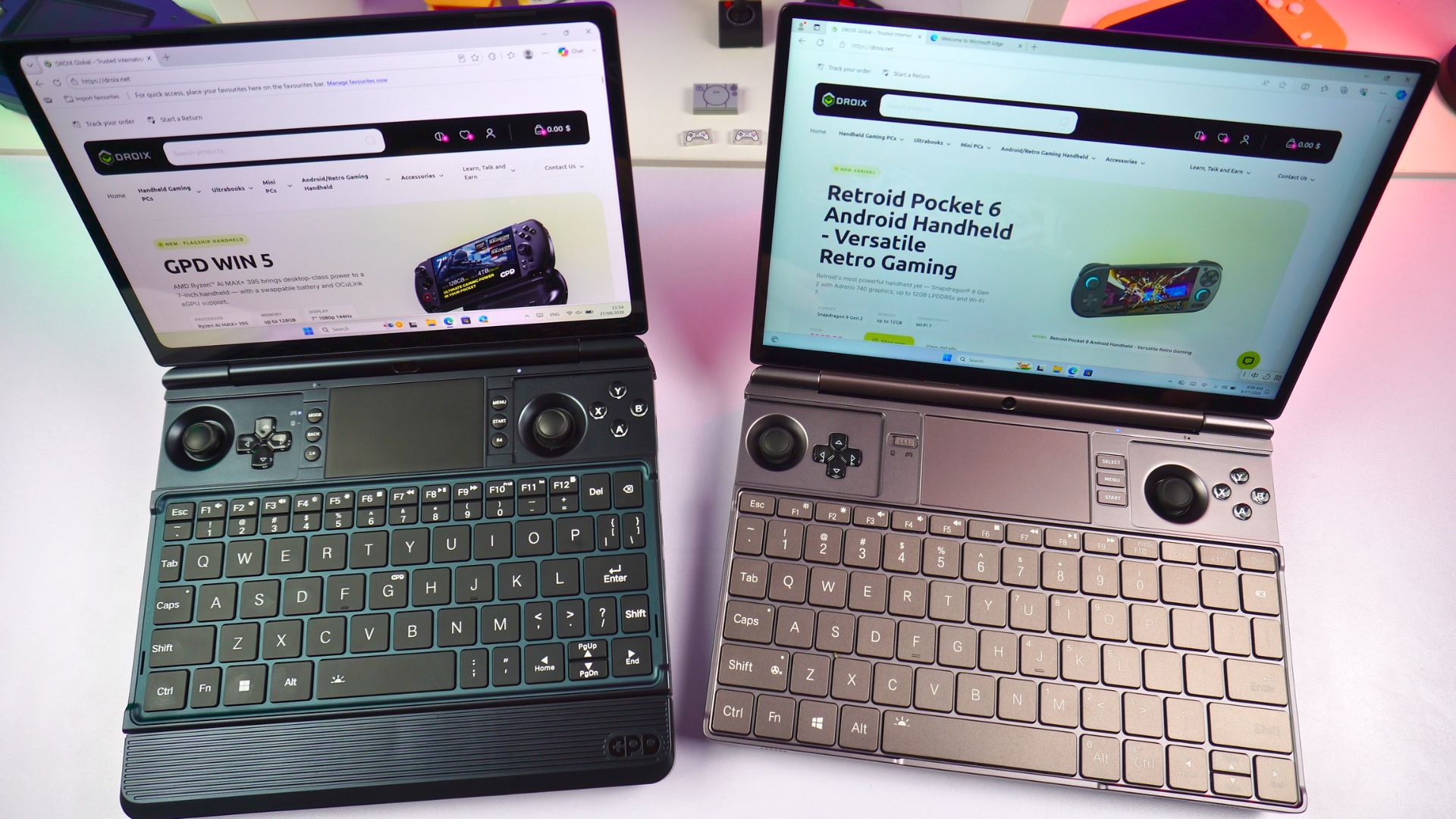
The biggest generational change is the processor platform. Depending on the MAX 2 generation, it may use an AMD Ryzen 7 6800U, 7840U, 8840U or Ryzen AI 9 HX processor. The Ryzen AI Max+ platform in the MAX 3 provides a large performance uplift, particularly in demanding games and graphics-heavy workloads.
| Feature | GPD WIN MAX 3 | GPD WIN MAX 2 comparison |
|---|---|---|
| Display | 9.06-inch AMOLED, up to 165Hz | 10.1-inch LCD, 60Hz |
| Reviewed CPU | Ryzen AI Max+ 388 | Ryzen 7 6800U, 7840U, 8840U or Ryzen AI 9 HX, depending on generation |
| GPU | Radeon 8060S | Radeon 680M, 780M, 890M or generation-dependent graphics |
| Battery design | External modular battery | Internal battery |
| Storage expansion | Internal second SSD slot and removable-card expansion | Additional internal/covered SSD slot depending on model |
Technical specifications
GPD offers two processor versions for the WIN MAX 3. The review unit contains the AMD Ryzen AI Max+ 388 with 8 cores and 16 threads, while the higher-tier AMD Ryzen AI Max+ 395 doubles that to 16 cores and 32 threads. Both configurations use AMD Radeon 8060S graphics.
| Specification | Ryzen AI Max+ 388 | Ryzen AI Max+ 395 |
|---|---|---|
| Cores / threads | 8 / 16 | 16 / 32 |
| Base / boost clock | 3.6 / 5.0GHz | 3.0 / 5.1GHz |
| Architecture | Zen 5, Strix Halo, 4nm | Zen 5, Strix Halo, 4nm |
| NPU | 50 TOPS | 50 TOPS |
| Total listed compute | 118 TOPS | 126 TOPS |
| Listed TDP range | 45W–110W | 45W–110W |
| Specification | GPD WIN MAX 3 |
|---|---|
| GPU | AMD Radeon 8060S |
| GPU architecture | AMD RDNA 3.5 |
| GPU compute units | 40 |
| GPU boost clock | Up to 2.9GHz |
| AI performance | Up to 50 TOPS |
| Memory | Up to 128GB LPDDR5X |
| Memory speed | Up to 8000 MT/s |
| Internal storage | M.2 NVMe PCIe 4.0 SSD 2280 (main up to 4TB) 2230 (empty) |
| Storage expansion | M.2 2230 NVMe SSD slot |
| Display size | 9.06 inches |
| Display type | AMOLED |
| Display resolution | 2400 × 1504 |
| Aspect ratio | 16:10 |
| Refresh rate | 165 Hz / 144 Hz / 120 Hz / 60 Hz |
| Touchscreen | Yes |
| Operating system | Windows 11 Home |
| Wireless connectivity | Wi-Fi 6E |
| Bluetooth | Bluetooth 5.3 |
| USB ports | USB4 Type-C, USB 3.2 Gen 2 Type-C, USB 3.2 Gen 2 Type-A |
| Video output | USB4 Type-C and HDMI |
| HDMI | HDMI 2.1 FRL |
| Audio | Stereo speakers and 3.5mm headphone jack |
| Camera | Built-in webcam |
| Battery | 97.53Wh |
| Charging | USB Type-C Power Delivery |
| Cooling | Active cooling with fan |
| Keyboard | Integrated full-size keyboard |
| Touchpad | Integrated touchpad |
| Game controls | Capacitive joysticks, D-pad, ABXY buttons, shoulder buttons and analogue triggers |
| Fingerprint reader | Yes |
| Dimensions | 8.14 × 5.78 × 1.33 inches (207 × 147 × 34mm) without a module 8.14 × 7.08 × 1.33 inches (207 × 180 × 34mm) with a module attached. |
| Weight | 815g (1.79lbs) without a module 1.2kg (2.69lbs) with the battery module 959g (2.11lbs) with the fan module. |
| Chassis colour | Black |
The system is powered by a 97.53Wh battery module. For our battery test, operation was capped at 45W TDP, with the display at full brightness and Cinebench running continuously. The result was 1 hour 47 minutes at full load, approximately 12 hours sitting idle on the Windows desktop and around six hours for more typical everyday use.
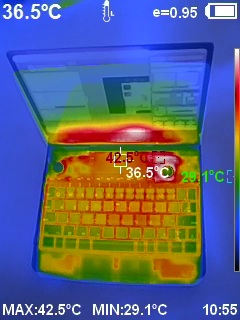
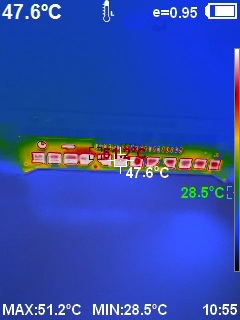
With the battery module connected, our fan and temperature testing recorded a maximum of 70dB, reducing to 60dB in the balanced profile. The area around the right analogue stick reached about 43°C, while the rear exhaust grilles reached approximately 50°C.
System benchmarks
On battery power, the GPD WIN MAX 3 supports up to 45W, while mains-powered operation reached around 80–90W in the supplied testing. We ran the system benchmarks at 80W. Because the unit is pre-production, the results should not be considered final and that production hardware may eventually support up to 110W.
PCMark 10
The GPD WIN MAX 3 topped this comparison in PCMark, scoring 10,060. It finished ahead of both GPD WIN 5 models and the ONEXFLY APEX, demonstrating strong all-round results for office work, general productivity and everyday system tasks.
| Model | Score |
|---|---|
| GPD WIN 5 (AMD MAX+ 395) | 8,130 |
| GPD WIN 5 (AMD MAX 385) | 8,522 |
| ONEXPLAYER ONEXFLY APEX (AMD MAX+ 395) | 9,160 |
| GPD WIN MAX 3 (AMD MAX+ 388) | 10,060 |
Cinebench 2024
Cinebench 2024 produced scores of 112 for single-core and 976 for multi-core. The single-core result was close to the faster GPD WIN 5 and ONEXFLY APEX, while the multi-core score ranked third overall and remained ahead of the WIN 5 fitted with the Ryzen AI Max+ 385.
| Model | Single-Core | Multi-Core |
|---|---|---|
| GPD WIN 5 (AMD MAX+ 395) | 110 | 1,511 |
| GPD WIN 5 (AMD MAX 385) | 111 | 930 |
| ONEXPLAYER ONEXFLY APEX (AMD MAX+ 395) | 113 | 1,719 |
| GPD WIN MAX 3 (AMD MAX+ 388) | 112 | 976 |
Geekbench 6
The GPD WIN MAX 3 recorded 2,853 in the Geekbench 6 single-core test and 14,620 in multi-core. Single-core performance was competitive, but the multi-core score placed it third behind the higher-performing WIN 5 MAX+ 395 and ONEXFLY APEX.
| Model | Single-Core | Multi-Core |
|---|---|---|
| GPD WIN 5 (AMD MAX+ 395) | 2,809 | 17,996 |
| GPD WIN 5 (AMD MAX 385) | 2,890 | 14,738 |
| ONEXPLAYER ONEXFLY APEX (AMD MAX+ 395) | 2,898 | 18,198 |
| GPD WIN MAX 3 (AMD MAX+ 388) | 2,853 | 14,620 |
3DMark
Time Spy was the strongest result in this comparison, with the GPD WIN MAX 3 reaching 10,960 and beating the GPD WIN 5 and ONEXFLY APEX. It scored 47,979 in Night Raid and 22,316 in Fire Strike. The Radeon 8060S remained capable, although both of those latter scores were below the competing systems.
| Model | Time Spy Score | Night Raid | Fire Strike |
|---|---|---|---|
| GPD WIN 5 (AMD MAX+ 395) | 10,541 | 57,589 | 23,739 |
| GPD WIN 5 (AMD MAX 385) | 10,016 | 48,884 | 22,952 |
| ONEXPLAYER ONEXFLY APEX (AMD MAX+ 395) | 10,635 | 61,861 | 23,452 |
| GPD WIN MAX 3 (AMD MAX+ 388) | 10,960 | 47,979 | 22,316 |
Gaming benchmarks
For comparison with other handheld systems, we tested the games at 1080p and 75W. The GPD WIN MAX 3 shows what a high-performance AMD handheld gaming PC can do, although the pre-production status means final retail power limits may change.
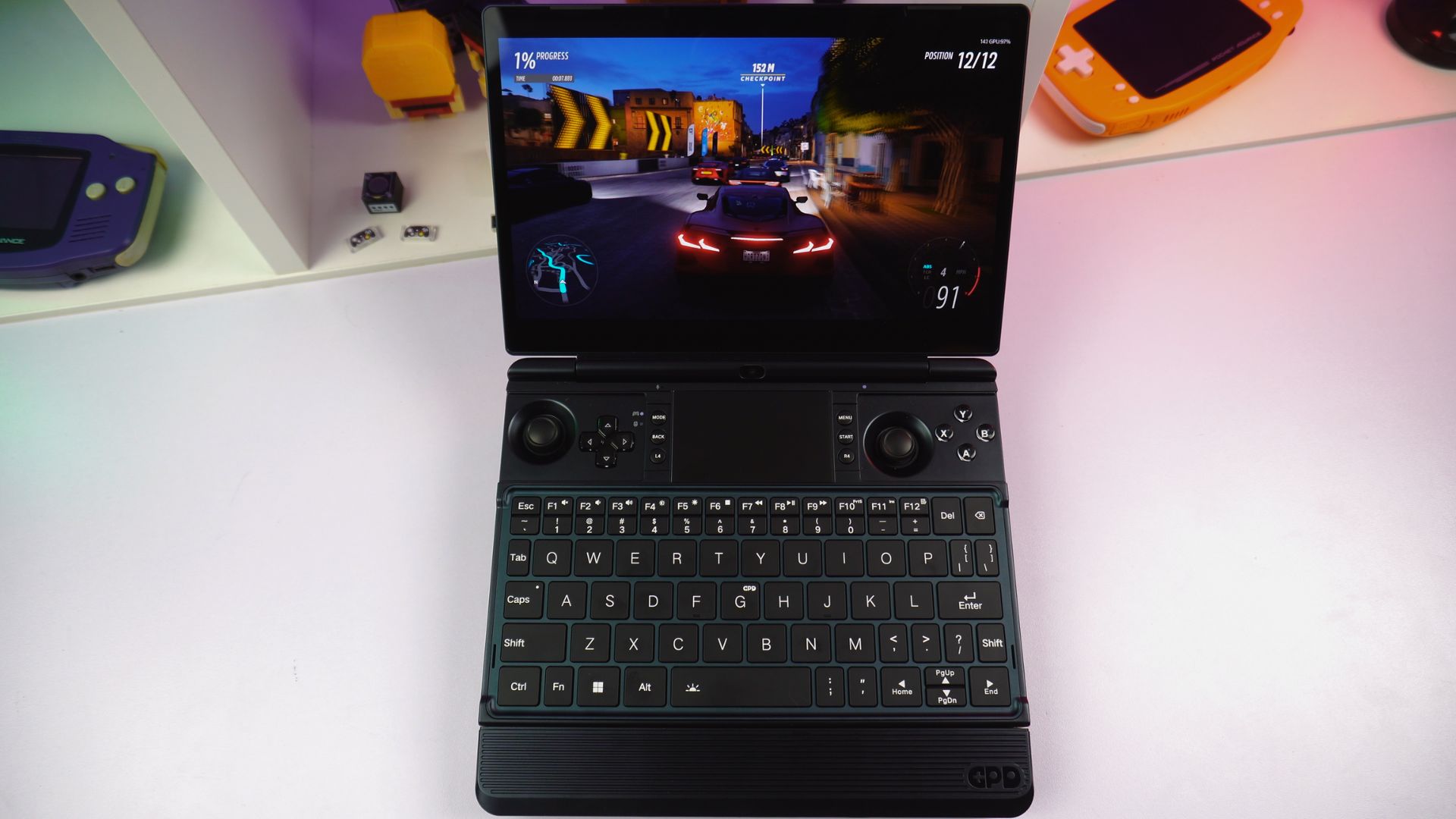
Forza Horizon 5
Forza Horizon 5 reached an impressive 230FPS at 75W, placing the GPD WIN MAX 3 second behind the ONEXFLY APEX. It delivered 191FPS at 55W and 141FPS at 28W, then 77FPS at 15W and 34FPS at 4W.
| Model | 75W TDP | 55W TDP | 28W TDP | 15W TDP | 4W TDP |
|---|---|---|---|---|---|
| GPD WIN 5 (AMD MAX+ 395) | 234 FPS | 222 FPS | 155 FPS | 80 FPS | 33 FPS |
| GPD WIN 5 (AMD MAX 385) | 216 FPS | 178 FPS | 137 FPS | 88 FPS | 35 FPS |
| ONEXPLAYER ONEXFLY APEX (AMD MAX+ 395) | 241 FPS | 230 FPS | 170 FPS | 87 FPS | 34 FPS |
| GPD WIN MAX 3 (AMD MAX+ 388) | 230 FPS | 191 FPS | 141 FPS | 77 FPS | 34 FPS |
Cyberpunk 2077
Cyberpunk 2077 produced the highest result in the comparison at 75W, where the GPD WIN MAX 3 reached 129.33FPS ahead of both GPD WIN 5 models and the ONEXFLY APEX. At 55W it managed 116.17FPS, followed by 71.86FPS at 28W, 35.68FPS at 15W and 22.96FPS at 4W.
| Model | 75W TDP | 55W TDP | 28W TDP | 15W TDP | 4W TDP |
|---|---|---|---|---|---|
| GPD WIN 5 (AMD MAX+ 395) | 127.57 FPS | 118.60 FPS | 72.11 FPS | 36.15 FPS | 23.34 FPS |
| GPD WIN 5 (AMD MAX 385) | 120.51 FPS | 110.29 FPS | 71.87 FPS | 39.44 FPS | 23.55 FPS |
| ONEXPLAYER ONEXFLY APEX (AMD MAX+ 395) | 124.18 FPS | 117.77 FPS | 78.43 FPS | 36.65 FPS | 23.32 FPS |
| GPD WIN MAX 3 (AMD MAX+ 388) | 129.33 FPS | 116.17 FPS | 71.86 FPS | 35.68 FPS | 22.96 FPS |
Forza Horizon 6
Forza Horizon 6 showed a clear relationship between available TDP and frame rate. The GPD WIN MAX 3 achieved 161FPS at 120W, 146FPS at 80W, 139FPS at 55W, 90FPS at 28W, 48FPS at 15W and 23FPS at 4W, giving you plenty of scope to balance speed and battery use.
| TDP | Forza Horizon 6 result |
|---|---|
| 120W (approximately 90W observed in the notes) | 161FPS |
| 80W | 146FPS |
| 55W | 139FPS |
| 28W | 90FPS |
| 15W | 48FPS |
| 4W | 23FPS |
Gaming performance at native resolution
We tested a selection of demanding modern games with settings chosen to target a smooth 60FPS or higher. These configurations are not necessarily the maximum possible performance settings, so lowering the resolution or adjusting individual options could deliver higher frame rates.
Forza Horizon 6
- Resolution: 2400 × 1504
- Graphics preset: Default Ultra
- Target performance: 60+ FPS
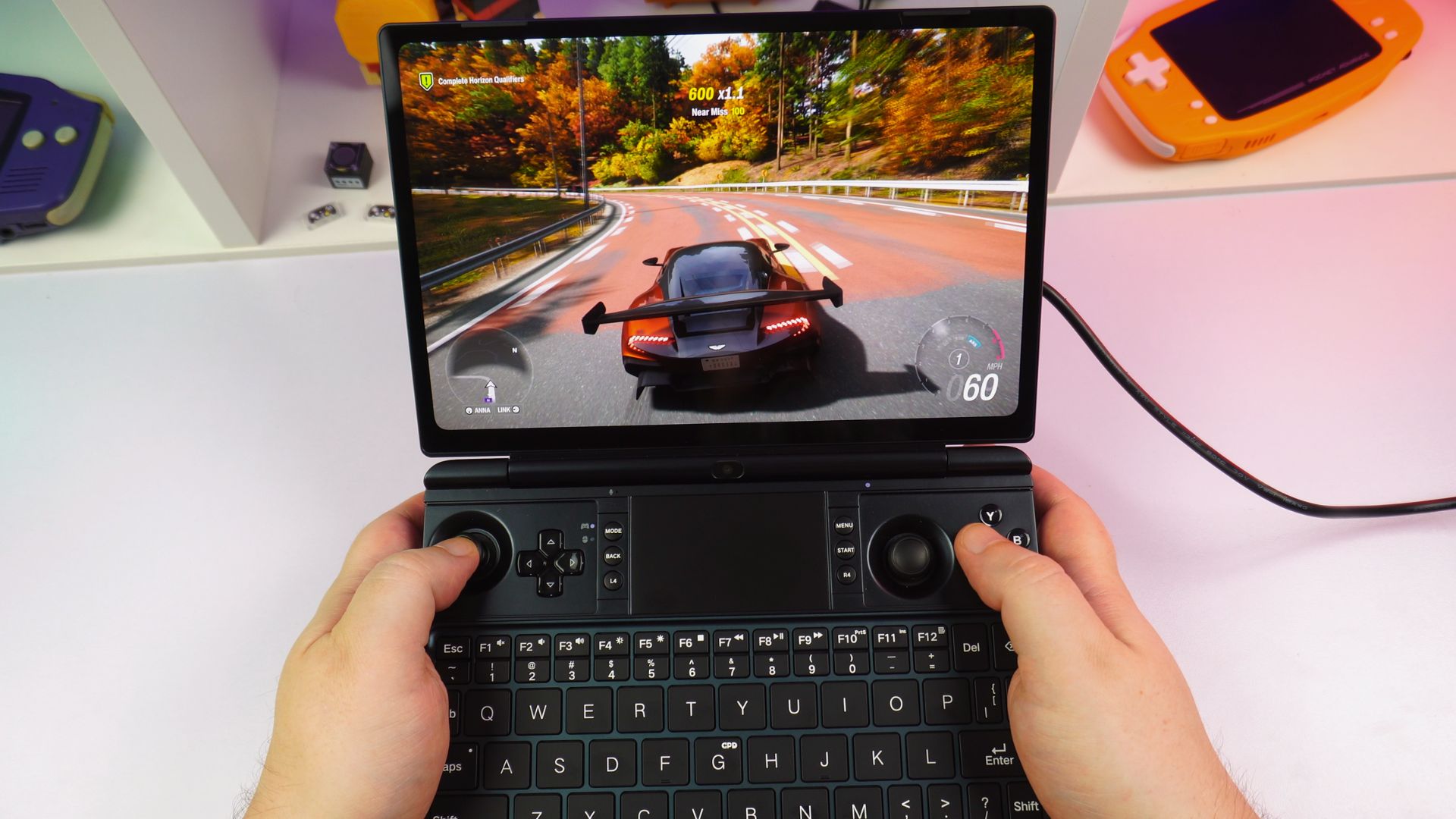
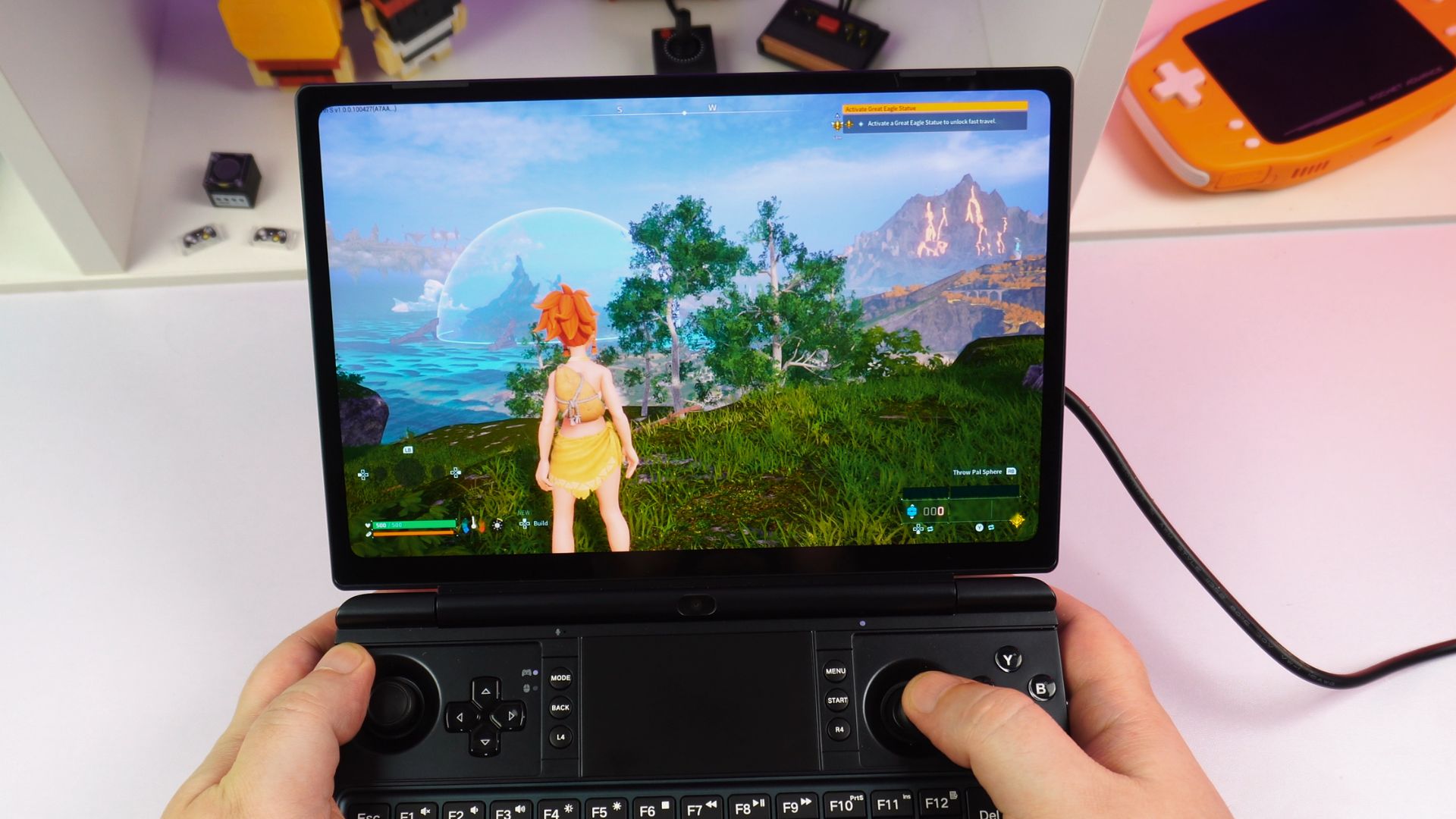
Forza Horizon 6 was played at the display’s native 2400×1504 resolution on the default Ultra preset. The result is a detailed open-world racing experience that remains above 60FPS.
DOOM: The Dark Ages
- Resolution: 2400 × 1504
- Graphics preset: Default High
- Upscaling: FSR set to Balanced
- Target performance: 60+ FPS
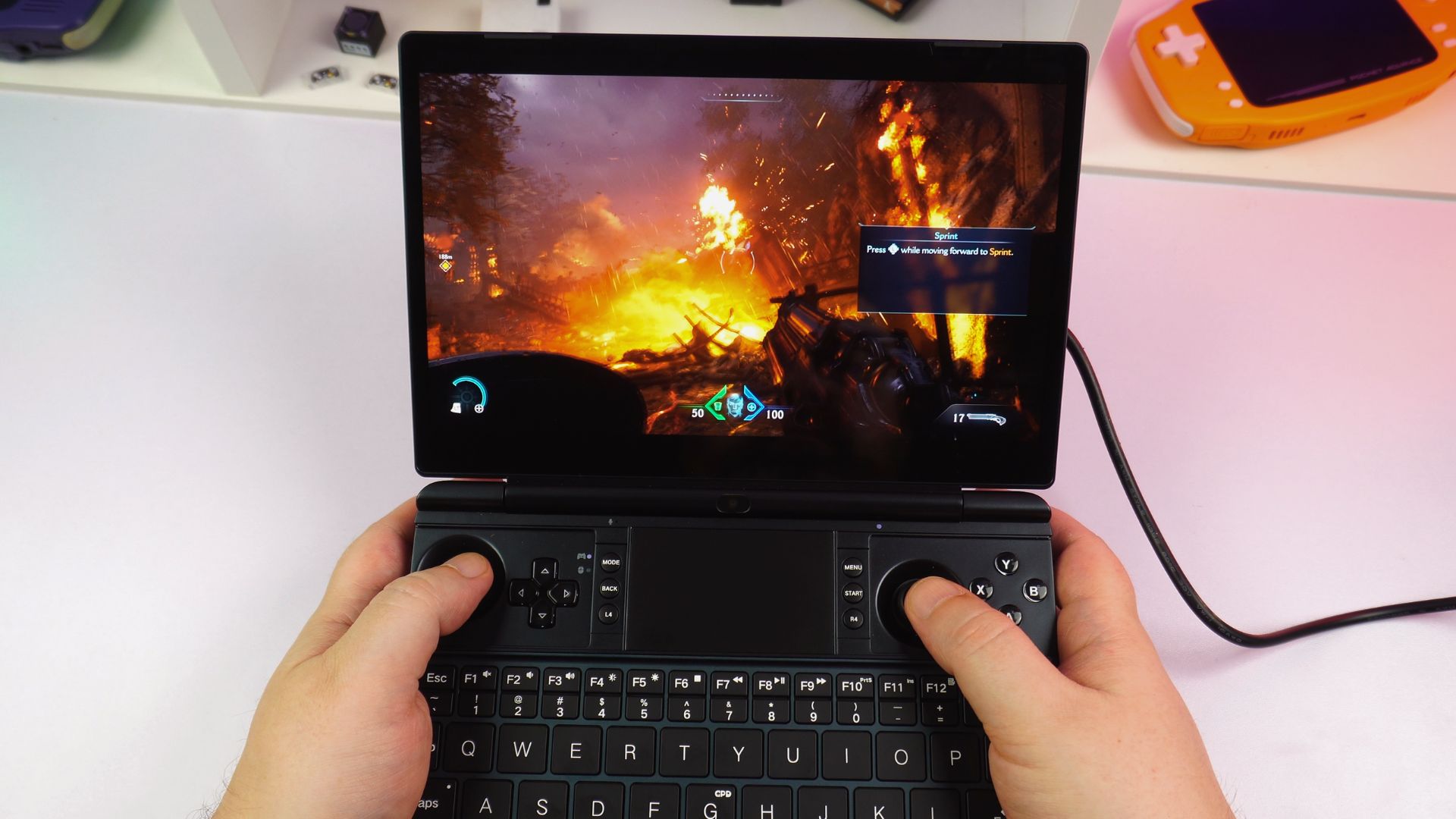
DOOM: The Dark Ages was tested at 2400×1504 using the default High preset and AMD FSR in Balanced mode. This combination retains a detailed image while helping combat remain smooth and responsive.
No Man’s Sky
- Resolution: 2400 × 1504
- Graphics preset: Default Ultra
- Upscaling: FSR 2 enabled
- Target performance: 60+ FPS
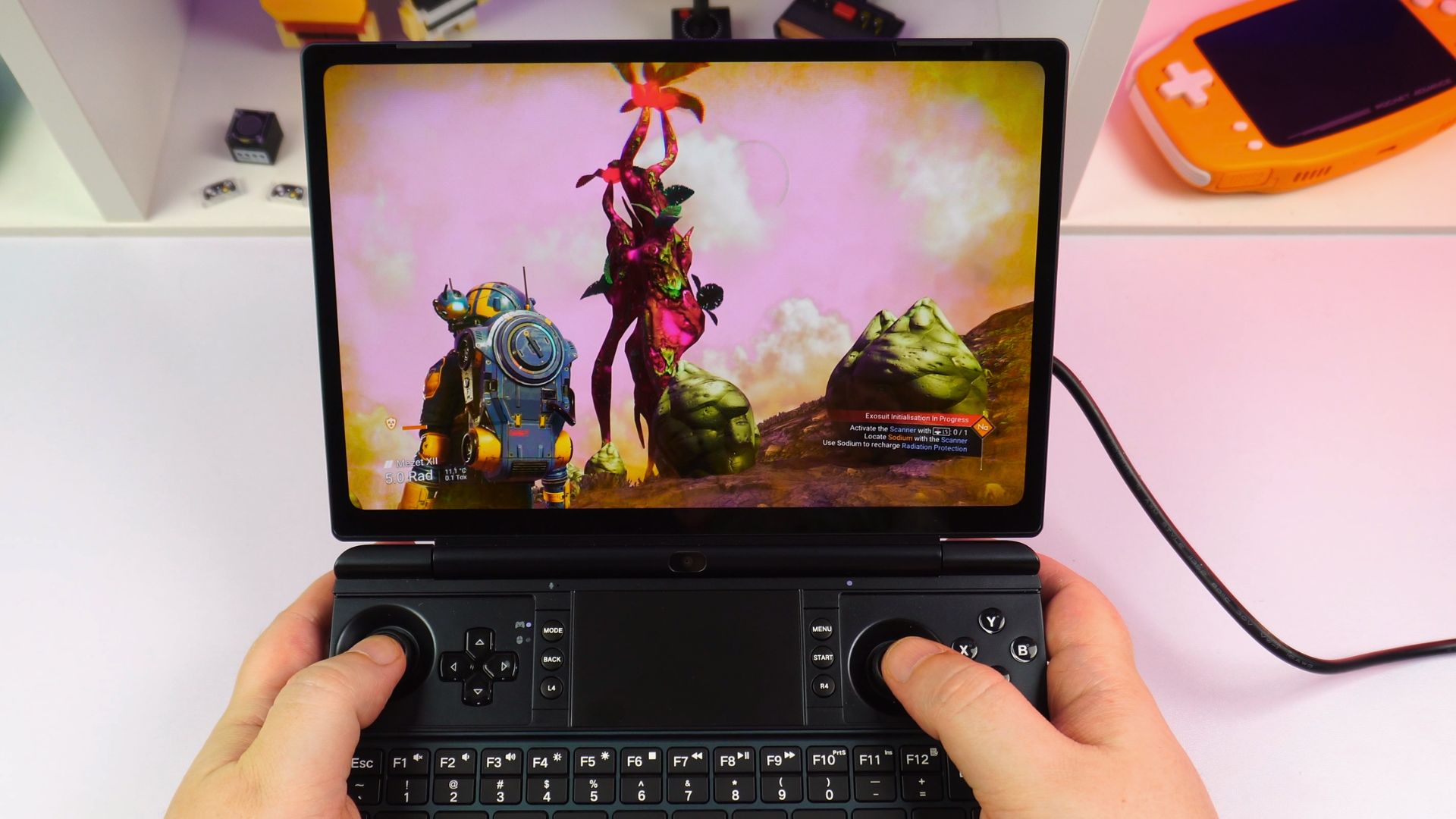
No Man’s Sky ran at the native 2400×1504 resolution with the default Ultra preset and FSR 2 enabled. This kept the game’s planets, environments and effects looking impressive while maintaining a smooth 60+FPS experience.
Emulator performance
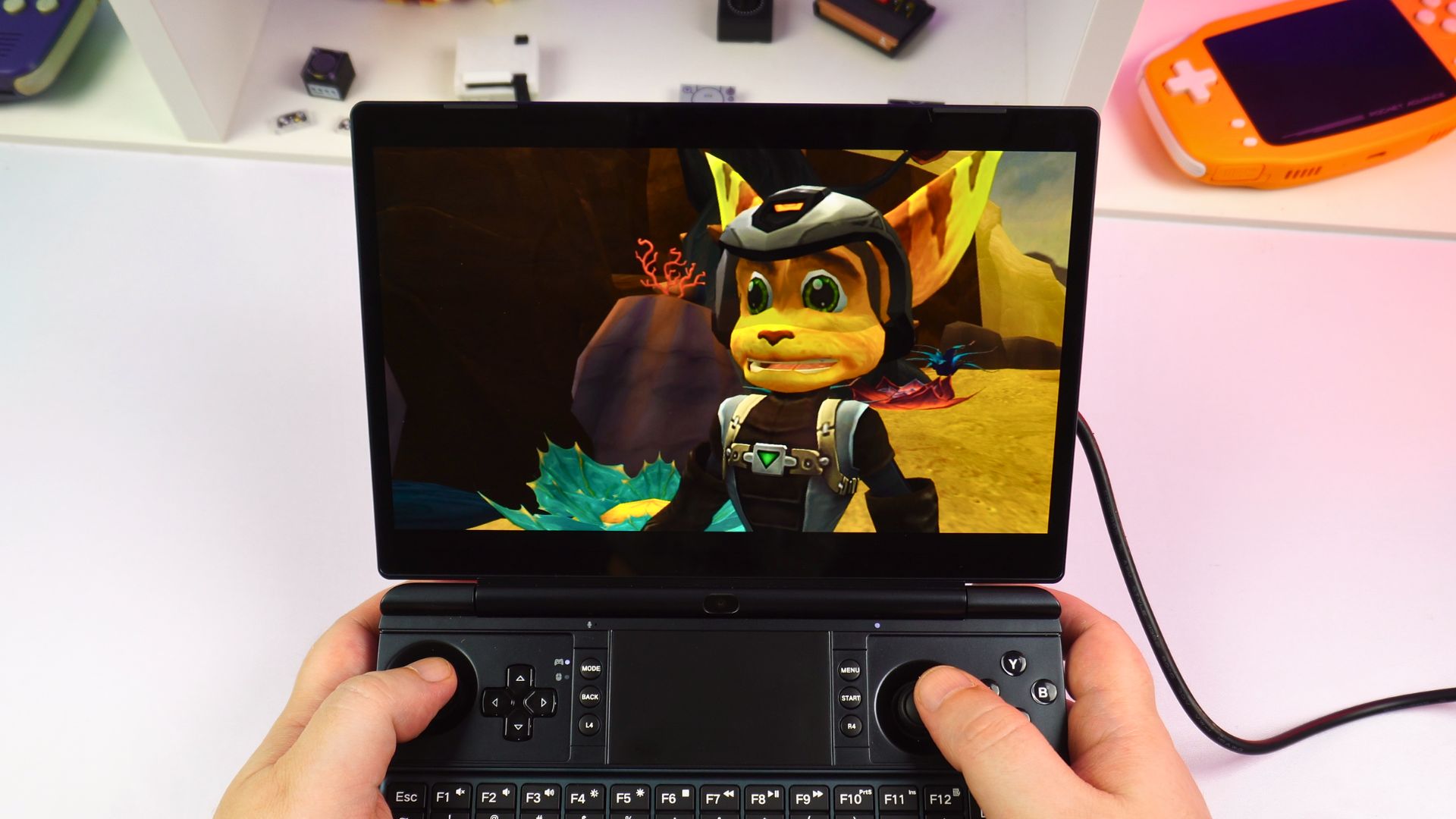
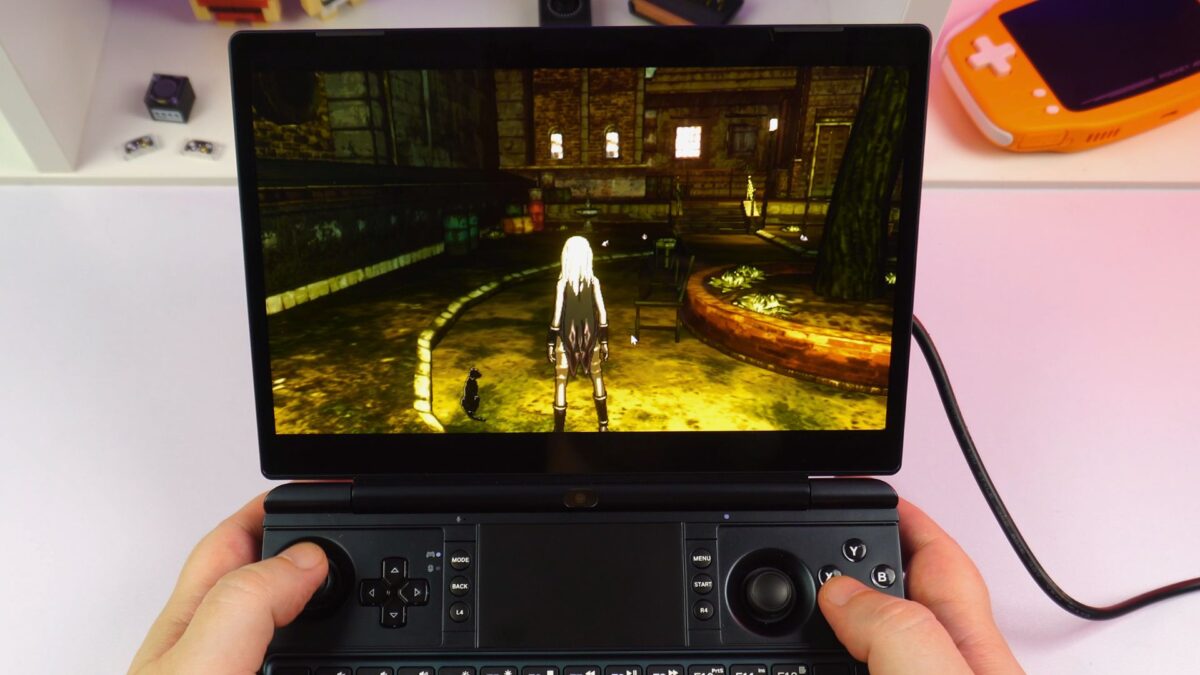
The Ryzen AI Max family performed extremely well for emulation in the GPD WIN 5, and the GPD WIN MAX 3 continues that strong showing. Compatible software covering later console and handheld generations should run very well, although results always depend on the emulator and the individual game.
RPCS3
Compatible PlayStation 3 titles ran well through RPCS3. In many cases, the rendering resolution could be increased to 1080p and graphical tweaks applied without causing problems.
Vita3K
Vita3K also performed very well with compatible games. Rendering could be increased to as much as 4x while maintaining a reliable 60FPS in suitable titles.
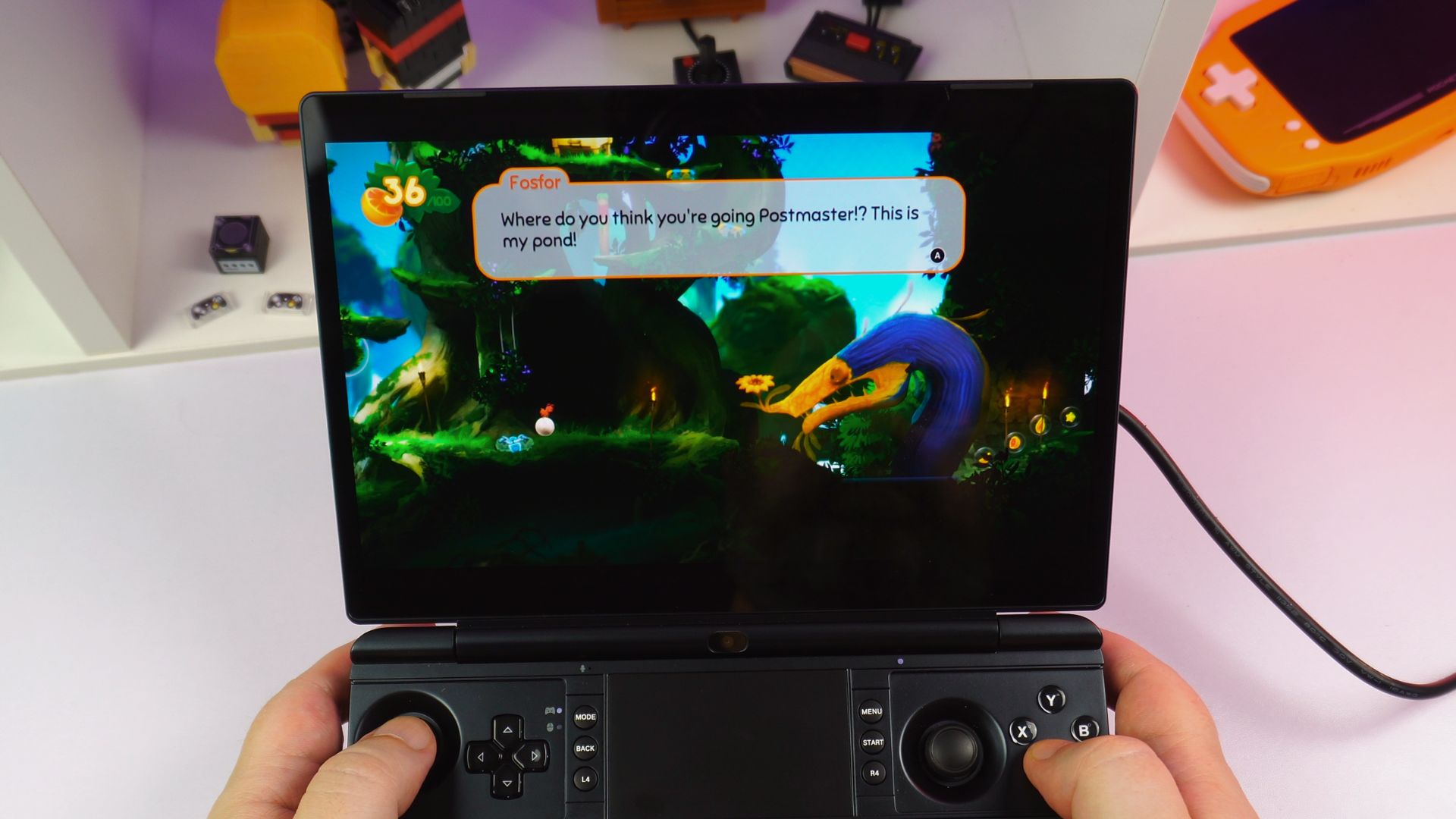
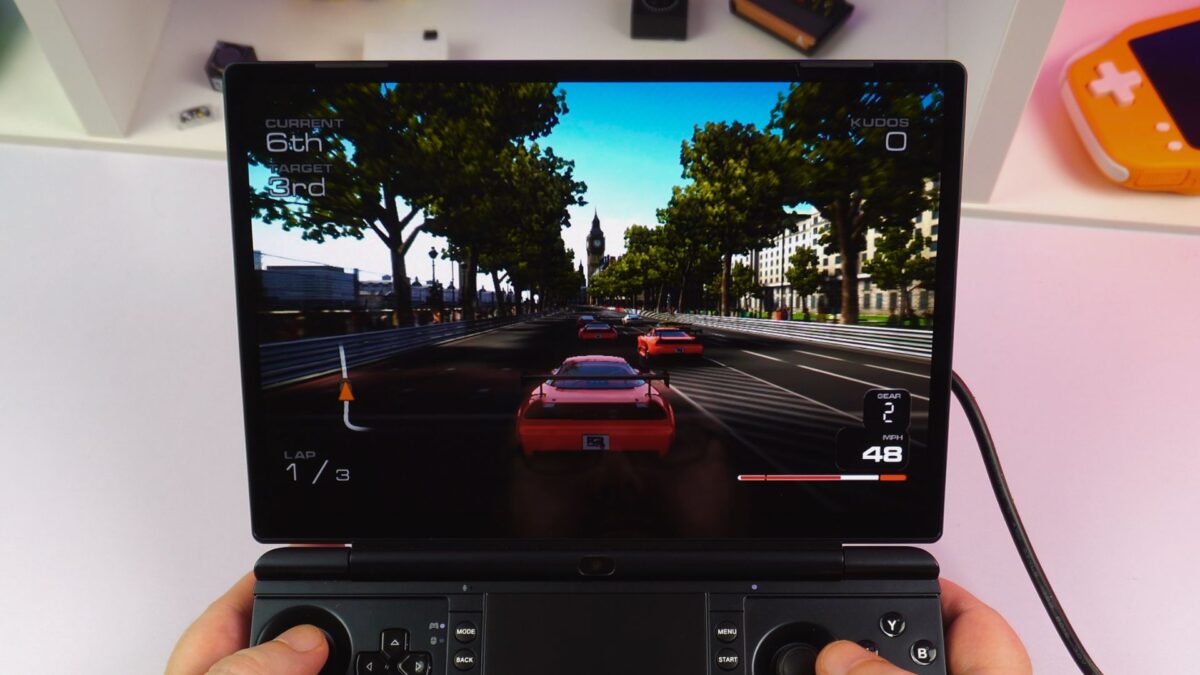
Eden
The Eden emulator handled compatible first-party and third-party games well. Depending on the title, additional graphics settings can be adjusted to improve image quality or maintain performance.
Xenia
Compatible Xbox 360 games ran well in Xenia, which continues to improve. When issues do occur, they are more likely to come from emulator compatibility than insufficient system performance.
Final thoughts
The GPD WIN MAX 3 represents a meaningful upgrade over the MAX 2 family, which has already gone through four processor generations. It updates the performance platform while retaining the Max identity, including the covered controls that help it look professional when used as a laptop.
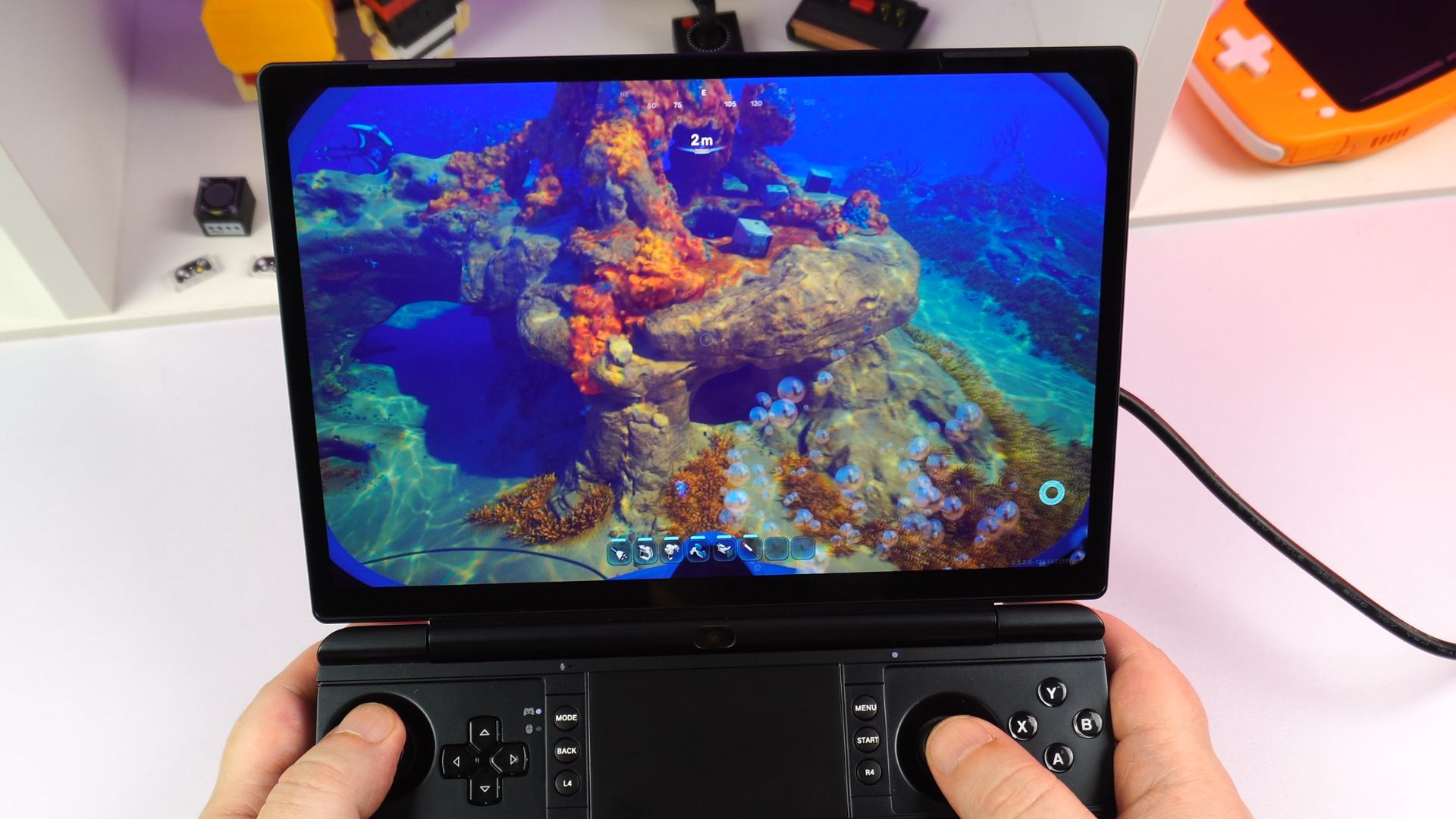
The new display is one of the most welcome changes. The earlier LCD was functional but looked dated next to newer gaming handhelds and ultrabooks, whereas the 165Hz AMOLED screen brings richer colour, deeper blacks and smoother motion.
Performance is excellent. Modern games can run at very good graphics settings, while less demanding titles can be run at lower TDPs to preserve battery life. As a professional-use ultrabook, it is also flexible, and the optional battery module can extend portable use when required.
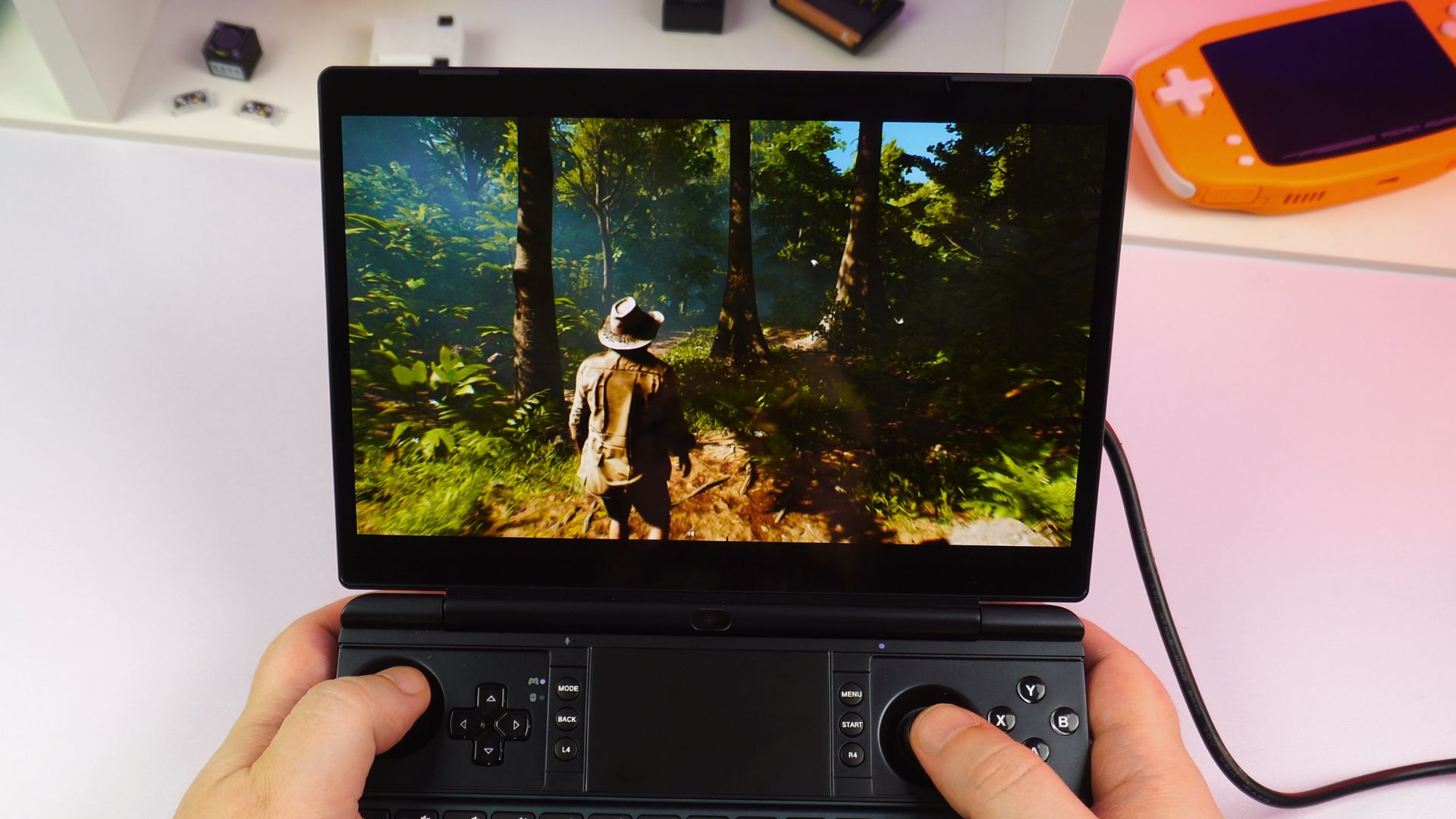
The GPD WIN MAX 3 successfully carries the MAX line forward and is suitable for gaming as well as professional tasks. Owners of earlier MAX 2 models have meaningful reasons to consider upgrading, particularly the display, graphics performance, storage flexibility and modular power system.
Our verdict — Is the GPD WIN MAX 3 worth buying?
Short answer: Yes. The GPD WIN MAX 3 is an excellent choice for users who want one device for modern Windows gaming, emulation and laptop-style productivity.
Best for: Gamers, professionals and enthusiasts seeking a powerful handheld gaming computer with a built-in keyboard, high-quality AMOLED screen and expandable battery system.
Not ideal for: Users who want the lightest possible handheld, quiet operation during heavy workloads or long full-performance sessions away from a charger.
Current status: Recommended based on testing a pre-production Ryzen AI Max+ 388 model; final retail firmware and power limits should be checked.
Rating: 4.8/5 — based on August 2026 testing; final retail hardware may affect the result.
The GPD WIN MAX 3 is one of the strongest devices in the handheld gaming PC category. Learn more at GPD Store and check the product page for pre-order availability, regional shipping and warranty information.
GPD WIN Max 3
Windows Handhelds
Processor ModelRyzen™ AI Max+ 388
Memory / Capacity32GB
Storage / Capacity1TB
on 4 storesThat concludes our GPD WIN MAX 3 review. More gameplay and performance-testing blogs and videos will be released in the coming weeks. If you do have any questions, please feel free to ask in the comments below and we will reply ASAP.
FAQs
What is the GPD WIN MAX 3?
The GPD WIN MAX 3 is a Windows handheld gaming laptop with integrated controls, a full keyboard, a 9.06-inch 165Hz AMOLED touchscreen and AMD Ryzen AI Max+ processor options.
Is the GPD WIN MAX 3 good for modern PC games?
The GPD WIN MAX 3 is good for modern PC games, with the reviewed Ryzen AI Max+ 388 model delivering strong results in Forza Horizon 5, Cyberpunk 2077 and Forza Horizon 6 at 1080p and native resolution.
How long does the GPD WIN MAX 3 battery last?
The GPD WIN MAX 3 lasted 1 hour 47 minutes in the full-load Cinebench test at 45W, approximately 12 hours while idle on the desktop and around six hours during typical everyday use in our testing.
Is the GPD WIN MAX 3 a good upgrade from the WIN MAX 2?
The GPD WIN MAX 3 is a good upgrade from the WIN MAX 2 if you want a faster Ryzen AI Max+ platform, Radeon 8060S graphics, a 165Hz AMOLED display, modular battery support and stronger gaming performance.
Is the GPD WIN MAX 3 suitable for work?
The GPD WIN MAX 3 is suitable for work because it has a laptop-style backlit keyboard, Precision touchpad, fingerprint reader, webcam, HDMI output and a design that hides the integrated gaming controls.
Is the GPD WIN MAX 3 the most powerful handheld gaming PC?
The GPD WIN MAX 3 is among the most powerful handheld gaming PCs tested in this comparison, but the final ranking depends on the configuration, TDP, cooling module, firmware and workload.








Questions & answers