


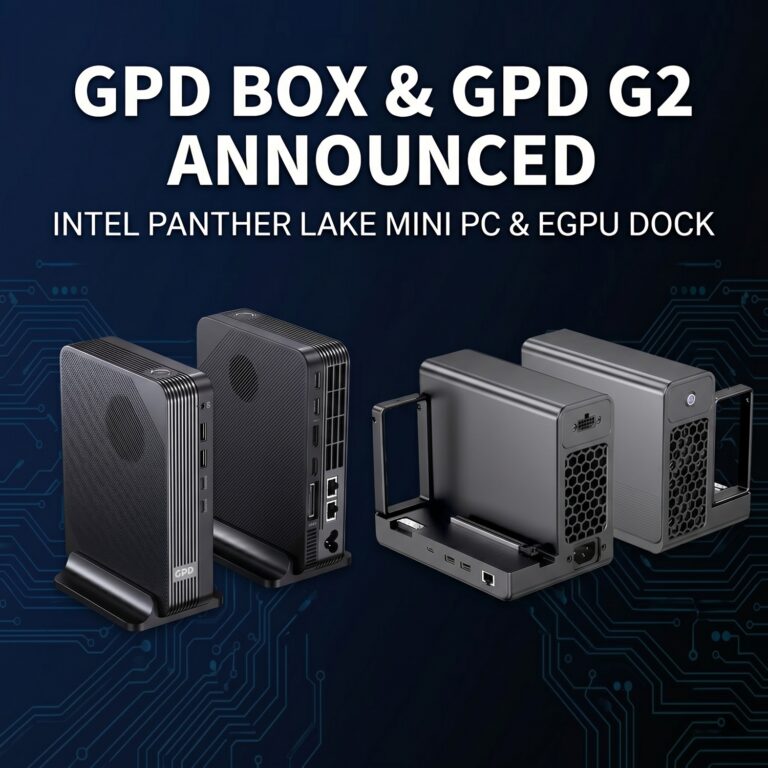
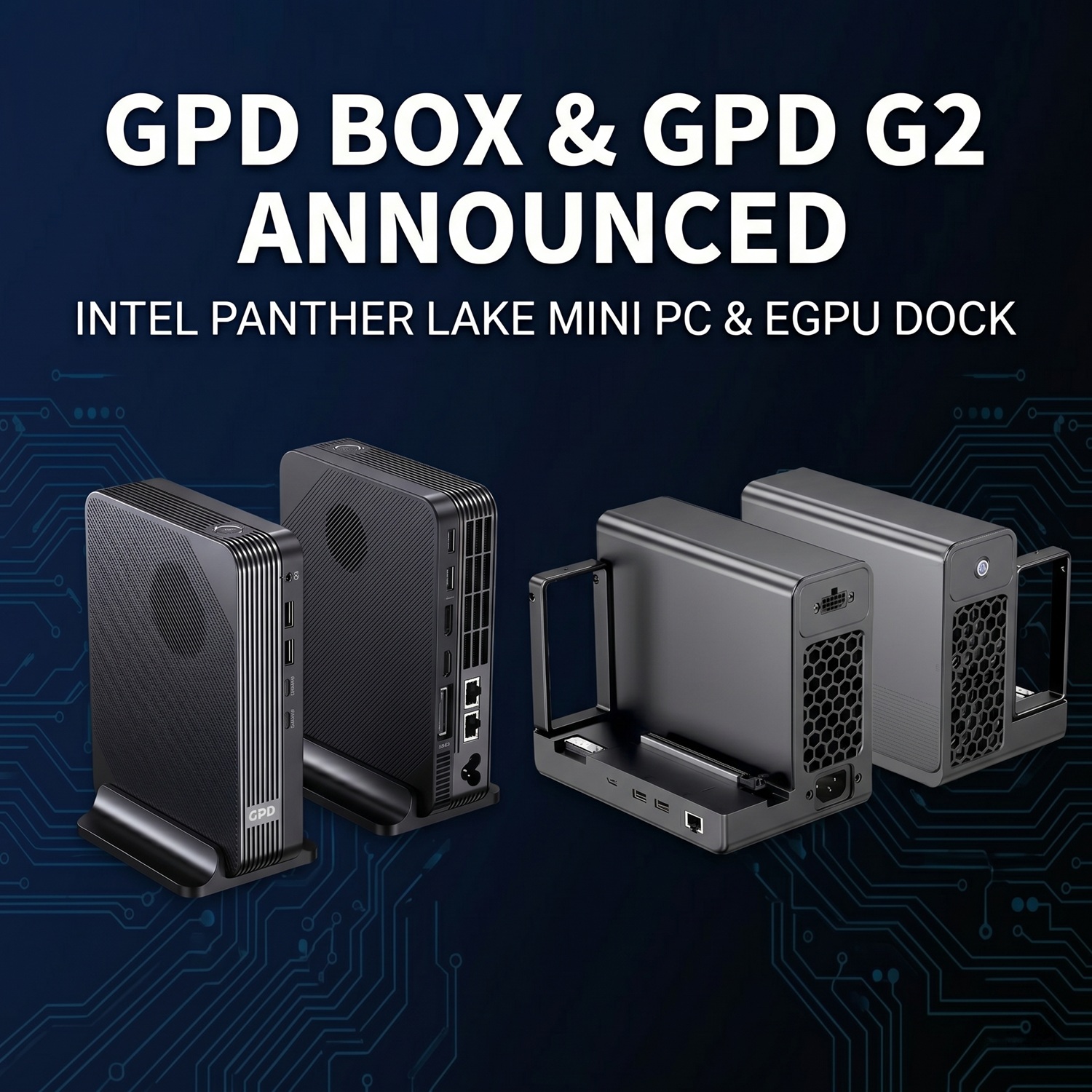
Ce sunt GPD G2 și GPD BOX? GPD G2 este un dock eGPU MCIO și USB4 v2.0 recent anunțat, în timp ce GPD BOX este un desktop compact bazat pe Panther Lake pe care GPD îl prezintă ca primul său mini PC. Împreună, acestea formează o nouă pereche hardware construită în jurul expansiunii grafice externe cu lățime de bandă mai mare și o amprentă foarte mică pentru desktop.
Cu cele mai recente specificații oficiale acum disponibile, imaginea este mult mai clară decât a fost în stadiul de teaser. GPD nu prezintă doar un mini PC și un dock eGPU în același timp, ci și o idee de platformă mai amplă, în care BOX acționează ca sistem de bază compact, iar GPD G2 acționează ca strat grafic și de expansiune de putere mai mare.
Aceasta este ceea ce face ca acest anunț să fie mai interesant decât o simplă lansare de produs. În loc să trateze mini PC-ul și dock-ul ca pe niște accesorii separate, GPD le prezintă ca pe un pachet de performanțe potrivite pentru utilizatorii care doresc o configurație de birou mai curată, hardware mai mic și mai mult spațiu pentru a mări puterea grafică atunci când este necesar. Pentru oricine navighează deja printre sistemele compacte GPD, hardware premium adiacent portabilelor sau înlocuitori flexibili de desktop, această asociere este în mod clar menită să deschidă o nouă cale între mini laptopuri și PC-urile de gaming portabile mai largi.
Există încă necunoscute importante. GPD nu a confirmat încă prețurile, calendarul de lansare sau detaliile de lansare regională, iar câteva dintre afirmațiile principale privind jocurile și performanțele necesită încă un context de referință. Dar, în comparație cu primul teaser, ambele produse au acum mult mai multă substanță în spatele lor.
| Produs | Cele mai importante evenimente confirmate recent | De ce iese în evidență |
|---|---|---|
| GPD G2 | Slot PCIe Gen 5 x16, suport MCIO 8i pentru dispozitive grafice PCIe Gen 4 x8, USB4 v2.0, 2x USB-A, RJ45 Ethernet, slot M.2 2280, până la 100W PD, design ATX 3.1 Gold-rated, 800W ieșire continuă de 12V | Pare a fi o platformă grafică și de expansiune externă serioasă, mai degrabă decât un simplu dock |
| GPD BOX | Primul mini PC GPD, Panther Lake Core Ultra X7 358H sau Core Ultra 7 356H, grafică Xe3, până la 64GB LPDDR5x, stocare duală M.2, MCIO 8i, USB4 v2.0 dual, DP 2.1, HDMI 2.1, LAN 2.5G dual | Împinge GPD în spațiul desktop compact cu o fișă de specificații mult mai agresivă decât a sugerat primul anunț |
GPD G2 pare acum mult mai ambițios decât presupunea teaserul
Cea mai mare îmbunătățire a clarității vine de la noua pagină de specificații tehnice GPD G2. GPD a descris deja unitatea ca fiind primul dock eGPU cu două porturi MCIO din lume, dar pagina completă îl face să arate mult mai mult ca un șasiu grafic și de expansiune complet decât un accesoriu GPU extern de bază.
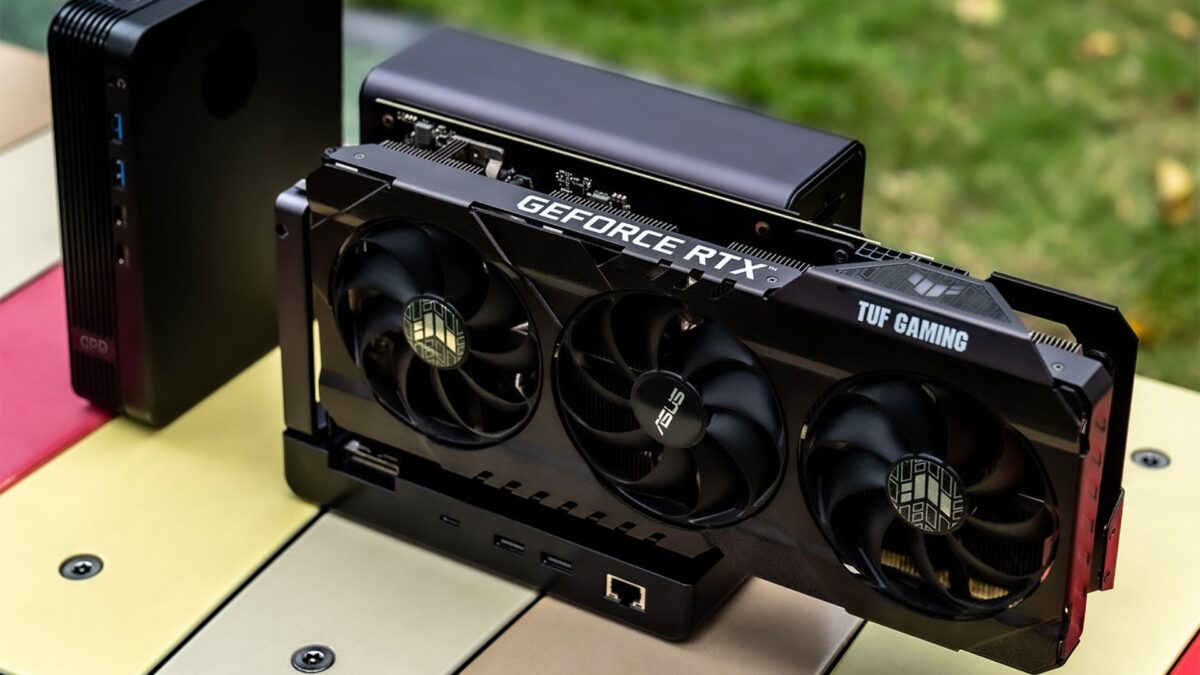
Conform specificațiilor publicate de GPD, dock-ul include un slot intern PCIe Gen 5 x16 și o conexiune MCIO 8i care acceptă dispozitive PCIe, inclusiv plăci grafice, prin intermediul unei legături PCIe Gen 4 x8. GPD enumeră, de asemenea, un port USB4 v2.0 cu suport pentru lățime de bandă simetrică de 80 Gbps sau asimetrică de 120/40 Gbps, împreună cu încărcare PD 3.0 de până la 100W. În plus, GPD G2 include două porturi USB 3.2 Gen 2 Type-A, un port RJ45 Gigabit Ethernet și un slot M.2 2280 care acceptă pornirea stocării externe.
Acest lucru contează, deoarece oferă GPD G2 o identitate mult mai largă. Acesta nu este comercializat doar ca o modalitate de a atașa un GPU desktop la un dispozitiv portabil sau la un laptop. GPD îl prezintă ca pe o platformă de expansiune externă flexibilă pentru PC-urile de acasă, handheld-urile high-end cu conectivitate de clasă Thunderbolt sau USB4, stațiile de lucru, serverele și chiar unele scenarii de tip HPC. De asemenea, se enumeră în mod explicit atât suportul pentru Windows 11, cât și pentru Linux.
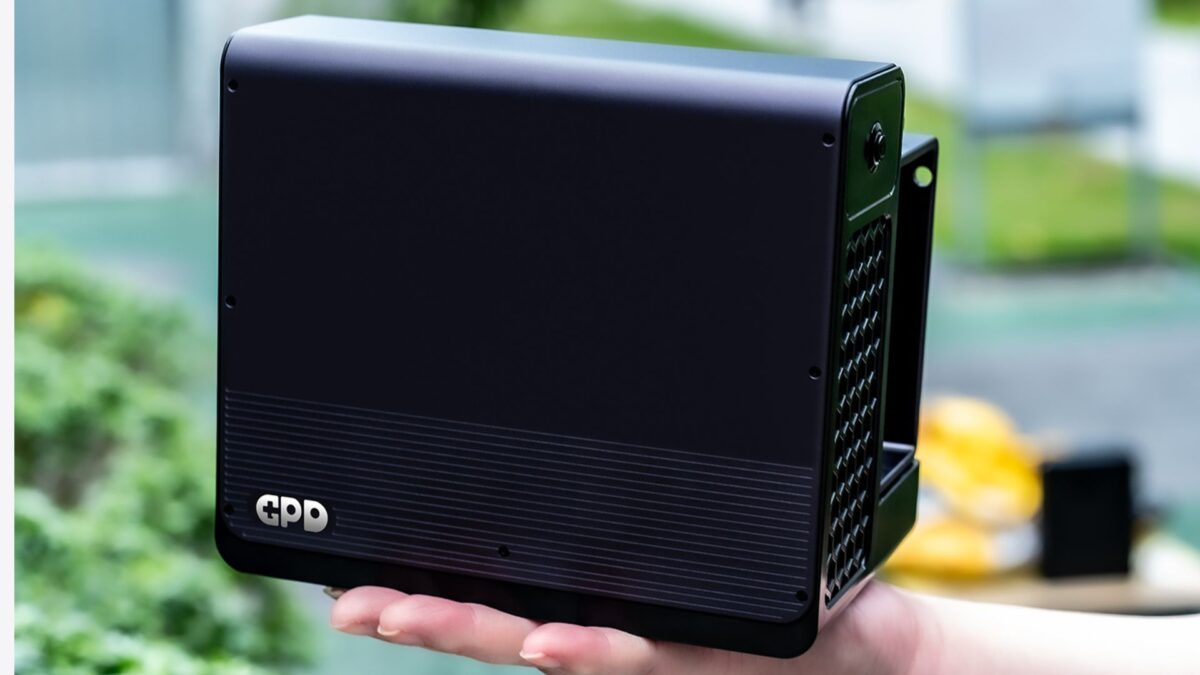
Furnizarea de energie este o altă parte importantă a poveștii actualizate. GPD spune că GPD G2 utilizează un design ATX 3.1 clasificat Gold, respectă cerințele ATX 3.1 pentru GPU, suportă alimentarea GPU de 12V-2×6 și poate furniza 800W de ieșire totală continuă de 12V. Acesta este un profil de putere mult mai serios decât ar presupune majoritatea cititorilor din graficele teaser originale.
GPD este, de asemenea, merge mult mai larg pe compatibilitatea GPU decât au sugerat primele imagini de marketing. Pagina oficială enumeră suportul pentru plăcile de consum NVIDIA GeForce GTX 10, GTX 16, RTX 20, RTX 30, RTX 40 și RTX 50, plăcile de consum AMD Radeon RX 400 până la RX 9000 și GPU-urile de consum Intel Arc seriile A și B. De asemenea, merge dincolo de hardware-ul de consum cu liste de suport publicate pentru plăcile NVIDIA Quadro și RTX pentru stații de lucru, liniile AMD Radeon Pro, GPU-urile Intel Arc Pro și chiar o gamă de acceleratoare pentru centre de date de la NVIDIA, AMD și Intel.
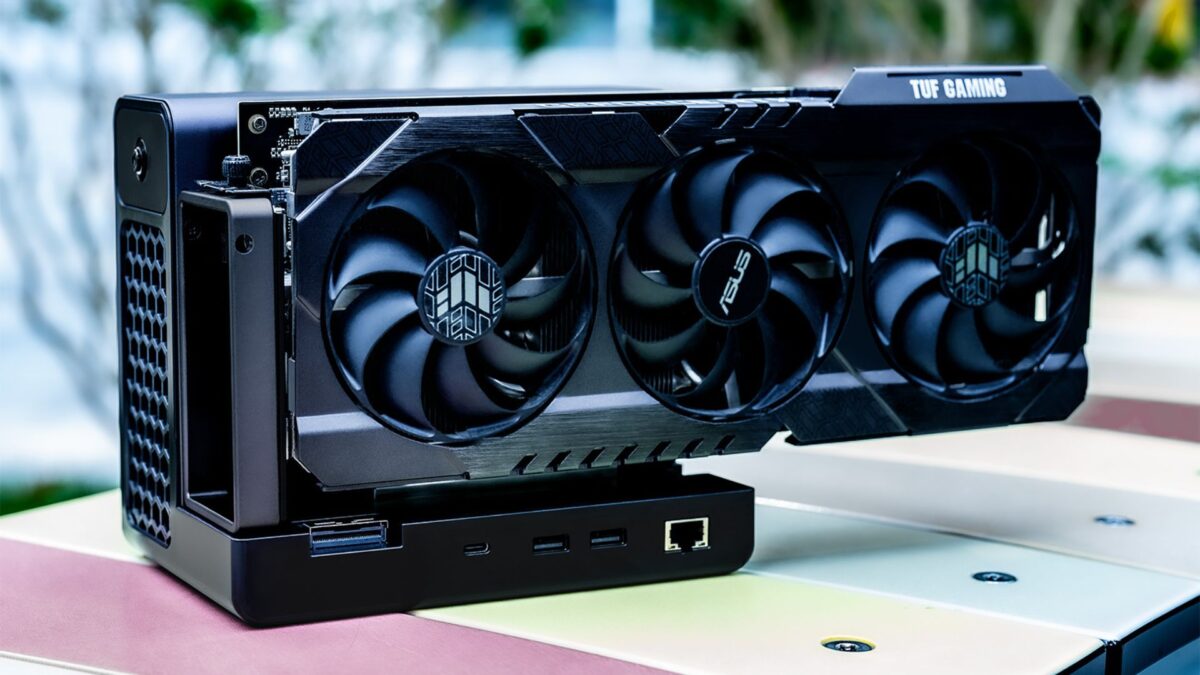
Afirmația principală este aceeași care a atras atenția prima dată: GPD spune că un RTX 4090 poate rula pe GPD G2 cu o pierdere de performanță de numai 2%. Materialul actualizat extinde, de asemenea, mesajul prin încadrarea dock-ului în cazuri de utilizare de tip 4090 sau 5090. Aceste afirmații sunt încă mai bine tratate ca poziționări GPD decât ca fapte stabilite, deoarece compania nu a publicat metodologia de testare, jocurile, rezoluțiile sau condițiile de benchmark necesare pentru a le verifica în mod independent.
Chiar și cu această rezervă, GPD G2 nu mai este doar o idee interesantă. Pe baza dovezilor actuale, pare a fi una dintre cele mai agresive încercări de până acum ale GPD de a face legătura între dispozitivele compacte și expansiunea grafică de clasă desktop.
Specificații tehnice complete GPD G2
| Categorie | Caracteristică | Specificații |
| Informații de bază | Marca | GPD |
| Dispozitive compatibile | PC-uri de uz casnic și desktop-uri pentru jocuri high-end (cu cel puțin un slot PCIe 3.0 x16 liber), handheld-uri pentru jocuri high-end (cu porturi Thunderbolt 3/4/5 sau USB4/USB4 v2.0), stații de lucru, servere și scenarii HPC (High-Performance Computing). | |
| Suport de sistem | Suportă distribuțiile Windows 11 și Linux. | |
| GPU-uri compatibile | GPU de consum | – NVIDIA: GeForce GTX 10 Series (Pascal), RTX 20 Series (Turing), GTX 16 Series (Turing), RTX 30 Series (Ampere), RTX 40 Series (Ada Lovelace), and RTX 50 Series (Blackwell) PCIe-based cards. – AMD: Radeon RX 400/500 Series (GCN 4.0), RX Vega Series (GCN 5.0), Radeon VII (GCN 5.0), RX 5000 Series (RDNA 1.0), RX 6000 Series (RDNA 2.0), RX 7000 Series (RDNA 3.0) și RX 9000 Series (RDNA 4.0) PCIe-based cards. – Intel: Arc A Series (Xe HPG) și Arc B Series (Xe2 HPG) PCIe-based cards. |
| GPU-uri pentru stații de lucru | – NVIDIA: Quadro K Series (Kepler), M Series (Maxwell), P Series (Pascal), A Series (Ampere), and RTX series (Blackwell) PCIe-based cards. – AMD: Radeon Pro WX Series (GCN), Pro W Series (GCN), Pro W5700 (RDNA), Pro W6000 Series (RDNA 2), Pro W7000 Series (RDNA 3) și AI PRO R9000 Series (RDNA 4) PCIe-based cards. – Intel: Arc Pro A Series (Xe) și Arc Pro B Series (Xe2) PCIe-based cards. | |
| GPU pentru centre de date | – NVIDIA: GPU-uri PCIe pentru centre de date, inclusiv seriile Tesla (Kepler, Maxwell, Pascal, Volta) și T4 (Turing), A100 (Ampere), H100/H200 (Hopper) și produse ulterioare. – AMD: plăci de calcul Instinct PCIe, inclusiv MI8 (GCN 3.0), MI6 (GCN 4.0), MI25 (GCN 5.0), MI100 (CDNA 1.0), seria MI200 (CDNA 2.0), seria MI300 (CDNA 3.0) și produse ulterioare. – Intel: GPU-uri PCIe pentru centre de date, inclusiv seria Max (Xe-HPC) și seria Flex (Xe-HPG). | |
| Conectivitate | Slot PCIe | ×1, PCIe Gen 5 ×16; lățime de bandă teoretică bidirecțională de 1024 Gbps, cu o lățime de bandă de date bidirecțională efectivă de aproximativ 126 GB/s. |
| Port MCIO 8i | Suportă dispozitive PCIe, inclusiv plăci grafice, prin PCIe Gen 4 × 8. Nu funcționează ca un hub atunci când este conectat singur; pentru a activa funcționalitatea Hub, este necesară o conexiune simultană la un port USB4 v2.0. | |
| Port USB4 v2.0 | ×1, suportă lățime de bandă simetrică de 80 Gbps (TX/RX) sau lățime de bandă asimetrică de 120/40 Gbps (TX/RX). Suportă protocolul PD 3.0 cu livrare de energie de până la 100W (5V/9V/12V/15V/20V). Atunci când este conectat alături de portul MCIO 8i, acesta gestionează doar extinderea Hub-ului și alimentarea PD; atunci când este conectat independent, acesta permite funcționalitatea eGPU. | |
| USB tip-A | ×2, USB 3.2 Gen 2, 10 Gbps. | |
| Slot NVMe M.2 | ×1, specificație M.2 2280, PCIe 3.0 × 2 (convertit de la USB 3.2 Gen 2). Suportă pornirea stocării externe. Dispune de un capac magnetic pentru SSD în culoarea Gunmetal. | |
| Port Ethernet | ×1, port Ethernet RJ45, auto-negociere 10/100/1000 Mbps. | |
| Specificații de putere | Tip | Clasificare aur ATX 3.1; conform cu cerințele ATX 3.1 pentru GPU; eficiență ≥ 92%. |
| Introducere | 100-240V, 50/60Hz. | |
| Putere totală de ieșire | 12V-2×6, putere totală de 12V, suportând o putere continuă de 800W. | |
| Comutator de alimentare | Indicator LED alb (ON: aprins / OFF: neaprins). | |
| Conector de alimentare GPU | 12V-2×6. | |
| Soclu de intrare AC | Priză IEC 60320 C14. | |
| Materiale și finisaje | Dimensiuni | 157,3 × 119,8 × 182 mm |
| Culoare | Gunmetal | |
| Materiale | Aliaj de aluminiu-magneziu, PC 94V-0 | |
| Greutate netă | 1605 g |
GPD BOX oferă GPD un prim pas mai serios în mini PC-uri
Pe partea de desktop, GPD folosește GPD BOX pentru a intra într-o categorie pe care a evitat-o în mare măsură până acum. Compania îl poziționează ca fiind primul său mini PC, iar pagina oficială de produs mai completă face mai ușor de înțeles de ce crede că acesta nu este doar o altă cutie de birou mică.
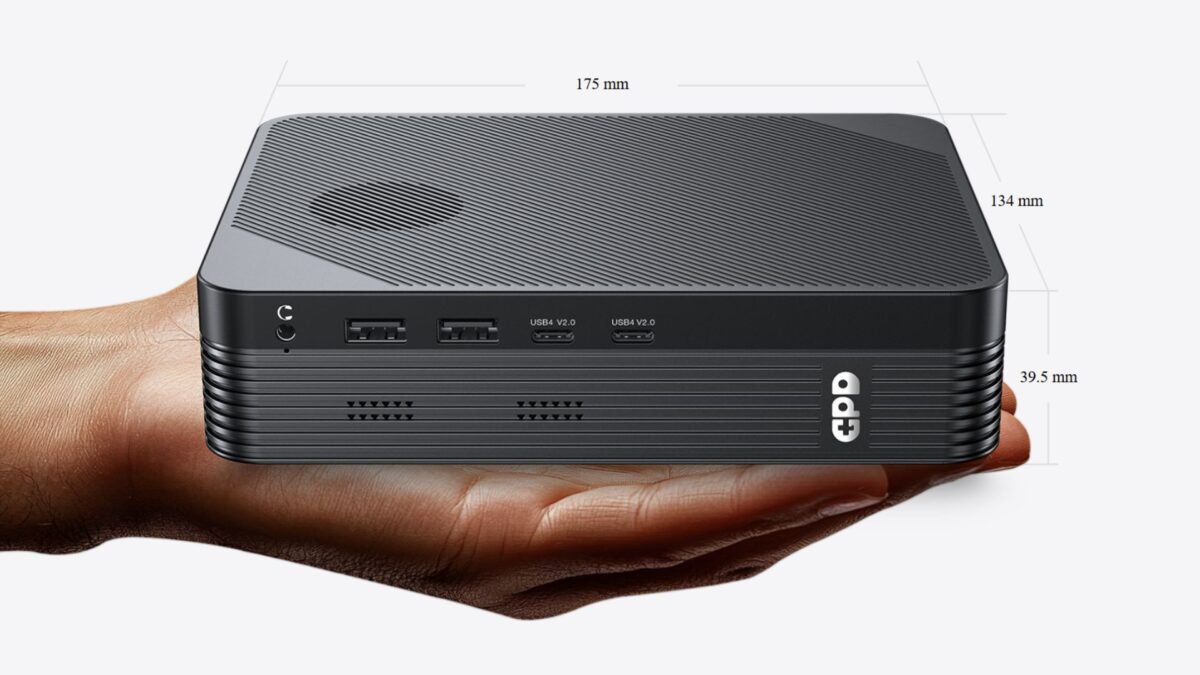
Gama de procesoare este acum clar definită. GPD listează două componente Intel Panther Lake, Intel Core Ultra X7 358H și Intel Core Ultra 7 356H, ambele din familia Intel Core Ultra Series 3. Opțiunile de memorie sunt listate la 32 GB sau 64 GB de LPDDR5x 8533 MT/s, ceea ce conferă GPD BOX un profil mai premium decât un mini PC de ocazie.
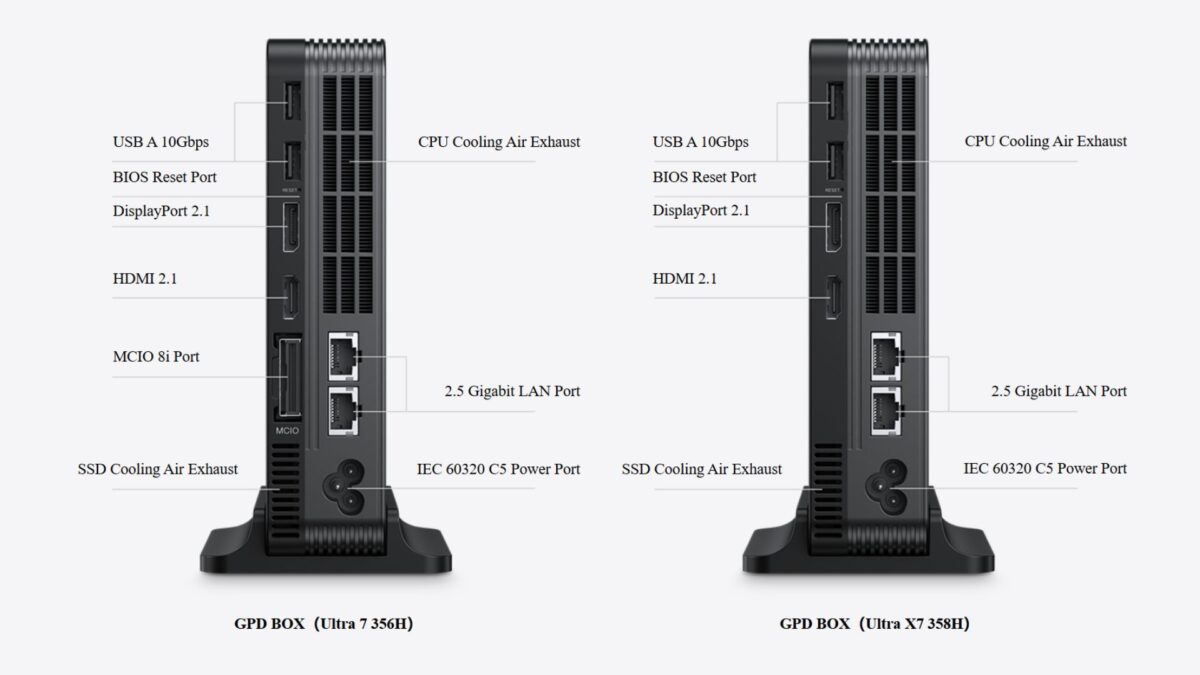
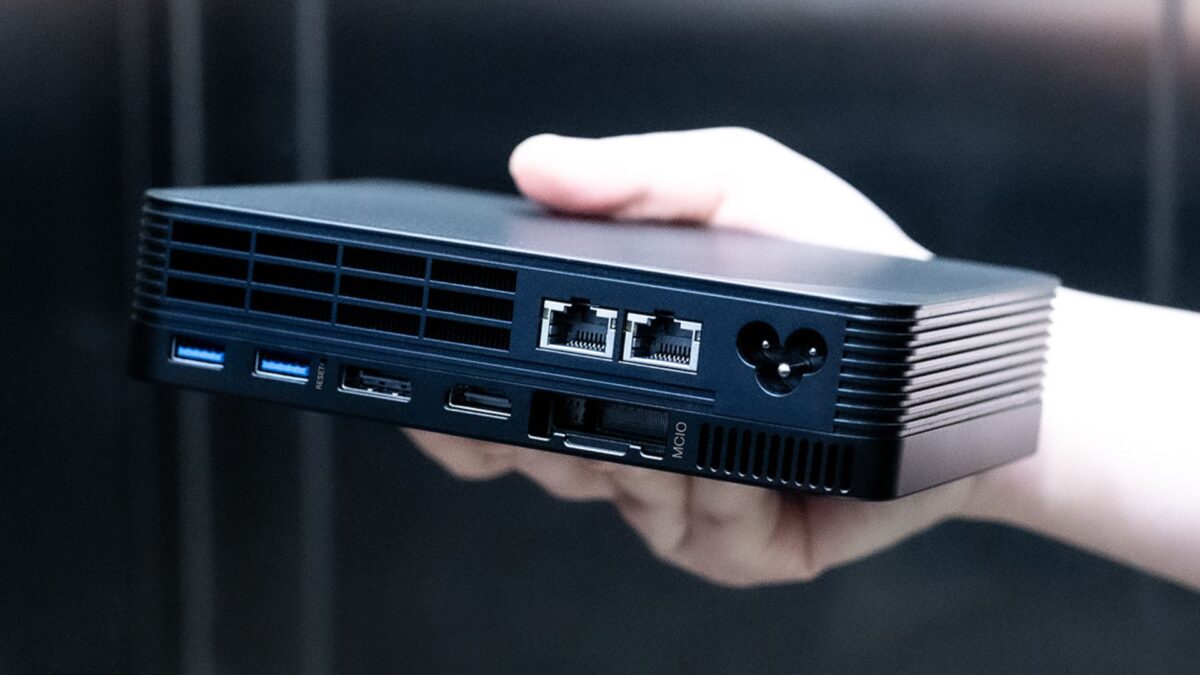
Stocarea și extinderea sunt, de asemenea, mai puternice decât media. GPD enumeră două sloturi M.2, un slot NVMe PCIe Gen 5 x4 și un slot PCIe Gen 4 x2, cu 2280 de opțiuni SSD de la 512 GB la 4 TB. BOX-ul include, de asemenea, un port MCIO 8i la 8i bazat pe PCIe Gen 5 x8. În propria imagine de marketing, GPD numește BOX un design MCIO 8i în premieră mondială, citează lățimea de bandă bidirecțională de 512 Gbps și spune că legătura MCIO 8i oferă de patru ori lățimea de bandă a OCuLink bazat pe PCIe 4.0 x4. Aceasta este o parte importantă a modului în care se dorește ca GPD BOX să fie perceput.
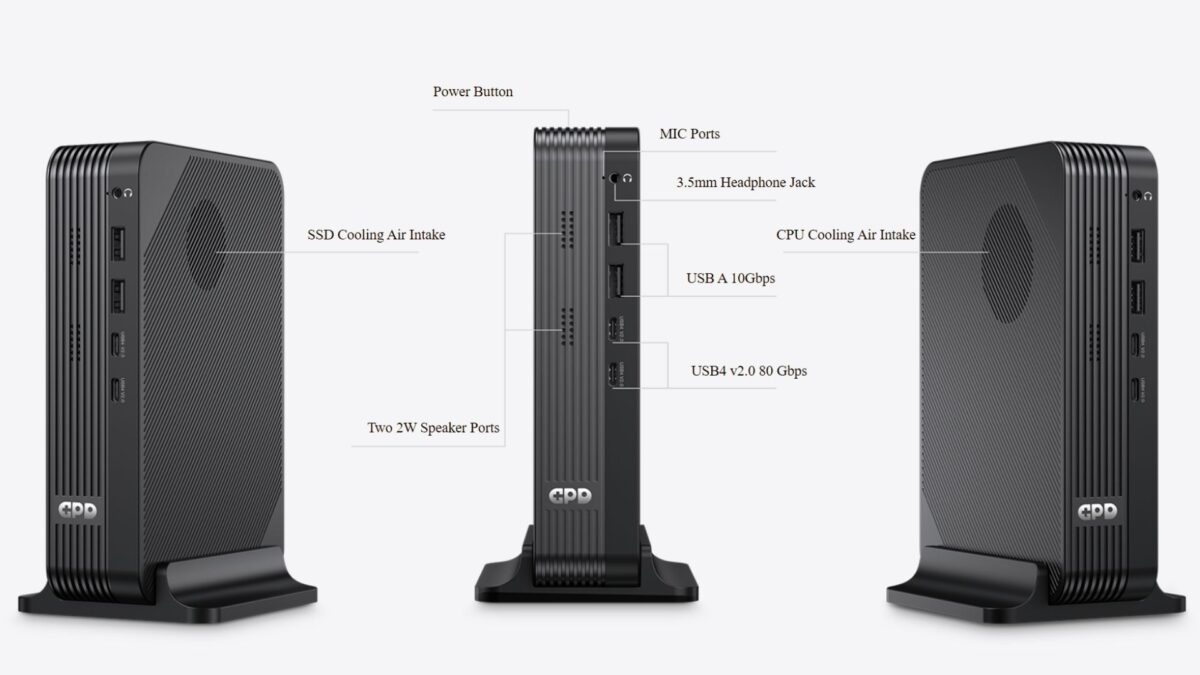
Dispunerea I/O este, de asemenea, deosebit de bogată. Conform paginii oficiale a GPD, GPD BOX include două porturi USB4 v2.0, o ieșire DisplayPort 2.1, un port HDMI 2.1, patru porturi USB 3.2 Gen 2 Type-A și două porturi LAN 2.5G. GPD descrie, de asemenea, configurația dublă USB4 v2.0 în materialele de marketing ca având o lățime de bandă bidirecțională de 160 Gbps, ceea ce întărește ideea că BOX este poziționat în jurul expansiunii și conectivității la fel de mult ca și în jurul specificațiilor CPU brute.
Toate acestea ajută la explicarea argumentului principal al GPD. Compania spune efectiv că GPD BOX poate servi ca o bază compactă pentru desktop, în timp ce GPD G2 o poate extinde într-o mașină mult mai puternică pentru jocuri sau pentru creatori. Cu alte cuvinte, BOX nu este vândut ca un mic PC izolat, ci ca jumătate a unui concept modular de performanță.
De asemenea, acest lucru oferă BOX-ului un loc clar în gama mai largă GPD. Pentru cumpărătorii cărora le place hardware-ul precum GPD WIN 5, BOX pare a fi o evoluție către același etos de performanță compactă într-un factor de formă mai apropiat de birou.
Specificații tehnice GPD BOX complete
| Categorie | GPD BOX (Ultra X7 358H) | GPD BOX (Ultra 7 356H) |
| CPU & iGPU | Intel® Core™ Ultra X7 358H – 16 nuclee | Până la 4,8 GHz Turbo Boost – 12 nuclee grafice Xe3 | 180 TOPS AI Power – 15-80W TDP configurabil | Intel® Core™ Ultra 7 356H – 16 nuclee | Până la 4,7 GHz Turbo Boost – 4 nuclee grafice Xe3 | 100 TOPS AI Power – 15-80W TDP configurabil |
| Stocare și expansiune | – Memorie: 32GB / 64GB LPDDR5x 8533 MT/s – Stocare: 1 × M.2 PCIe Gen 5 × 4 Slot – Expansiune: 1 × M.2 PCIe Gen 4 × 2 Slot – Preinstalat: 512GB – 4TB 2280 NVMe SSD | – Memorie: 32GB / 64GB LPDDR5x 8533 MT/s – Stocare: 1 × M.2 PCIe Gen 5 × 4 Slot – Expansiune: 1 × M.2 PCIe Gen 4 × 2 Slot – Preinstalat: 512GB – 4TB 2280 NVMe SSD |
| Porturi I/O | – 2 × USB4 v2.0 (80Gbps) – 1 × DisplayPort 2.1 (UHBR20) – 1 × HDMI 2.1 (FRL) – 4 × USB 3.2 Gen2 Type-A (10Gbps) – 2 × 2.5G RJ45 LAN (10/100/1000/2500 Mbps) – 1 × MCIO (PCIe 5.0 × 8) | – 2 × USB4 v2.0 (80Gbps) – 1 × DisplayPort 2.1 (UHBR20) – 1 × HDMI 2.1 (FRL) – 4 × USB 3.2 Gen2 Type-A (10Gbps) – 2 × 2.5G RJ45 LAN (10/100/1000/2500 Mbps) |
| Probă de gaming | – Integrat: 4-Core Xe3 Graphics | 512 Stream Processors – Performanță comparabilă cu Radeon 780M – Expansiune externă: Suport GPU cu interfață dublă – USB4 v2.0 (80Gbps): PCIe 5.0 × 4 | ~31.5 GB/s lățime de bandă – MCIO exclusiv: PCIe 5.0 × 8 | ~63 GB/s lățime de bandă – Ultimate Desktop Power: Suportă RTX 5090 / 5090D – Suport DLSS 4.0 | Până la 3x Frame Gen | 200-800 FPS performanță | – Integrat: 12-Core Xe3 Graphics | 1536 Stream Processors – XeSS 3 Super Sampling | Până la 4x Frame Generation – Oferă 60-120 FPS în majoritatea titlurilor AAA – Extensibil: GPU extern prin USB4 v2.0 (80Gbps) – PCIe 5.0 × 4 Shared Lane | ~31.5 GB/s lățime de bandă teoretică – Suportă până la NVIDIA GeForce RTX 5090 / 5090D – Suport DLSS 4.0 | 3x Frame Gen | Până la 200-600 FPS |
| Performanță AI | – 180 TOPS Int8 Peak AI Compute – Benchmark: Comparabil cu NVIDIA Jetson AGX Orin 64GB – La 25W TDP: Câștiguri masive de eficiență – LLM Throughput: De până la 3,9 ori mai rapid – Viteza Text-to-Speech (TTS): De până la 3,7 ori mai rapid – Multitasking Computer Vision: Până la 5,4x mai rapid | – 100 TOPS Int8 Aggregate AI Compute – Expansiune eGPU: Optimizat pentru agenți interactivi multimodali – Inferență LLM locală, calcul științific și simulare – Flux de lucru de la un capăt la altul: De la formarea modelului la implementare – Suport de înaltă performanță pentru prelucrarea datelor și formarea AI |
Panther Lake oferă GPD BOX o identitate de performanță mai clară
Panther Lake este motivul principal pentru care GPD BOX paremai credibil acum decât la prima dezvăluire. În anunțul oficial al platformei Intel, compania descrie Panther Lake, denumit acum Intel Core Ultra Series 3, ca fiind primul său SoC client construit pe Intel 18A și destinat PC-urilor AI, dispozitivelor de jocuri și sistemelor compacte.
GPD a legat acum BOX-ul de două cipuri specifice. Intel Core Ultra X7 358H este listat cu 16 nuclee, viteze de amplificare de până la 4,8 GHz, 12 nuclee grafice Xe3, până la 180 TOPS de performanță AI și un interval TDP configurabil de la 15 W la 80 W. Intel Core Ultra 7 356H este, de asemenea, listat cu 16 nuclee, viteze de amplificare de până la 4,7 GHz, 4 nuclee grafice Xe3, până la 100 TOPS și același interval configurabil de la 15W la 80W.
Aceste detalii confirmate fac GPD BOX mai ușor de încadrat pe piața mai largă a mini PC-urilor. Nu mai este doar un teaser Panther Lake cu o randare frumoasă a șasiului. Acum are ținte clare pentru CPU, ținte clare pentru GPU, un plafon de memorie cunoscut și o poveste de conectivitate publicată care se axează puternic pe extinderea grafică externă.
GPD atașează, de asemenea, un limbaj de performanță foarte specific pentru aceste cipuri. Pentru Ultra X7 358H, GPD pretinde între 60 și 120 FPS în majoritatea jocurilor AAA pe grafica Xe3 cu 12 nuclee integrată și subliniază suportul XeSS 3. Pentru Ultra 7 356H, performanțele grafice sunt comparabile cu grafica integrată Radeon 780M. Aceste afirmații ar trebui tratate cu precauție până când sunt susținute de date de testare mai complete, dar ele arată modul în care GPD dorește ca cele două configurații să fie înțelese.
Același lucru este valabil și pentru povestea IA. GPD prezintă BOX-ul de nivel superior ca o mașină de 180 TOPS și sistemul de nivel inferior ca un proiect de 100 TOPS, apoi leagă aceste cifre de munca LLM locală, calculul științific, simularea și cazurile de utilizare ale agenților multimodali. Rămâne de văzut dacă aceste afirmații se dovedesc convingătoare în sarcinile de lucru din lumea reală, dar compania a decis în mod clar că GPD BOX ar trebui să fie considerat mai mult decât un PC mic pentru sarcini ușoare de birou.
| GPD BOX confirmat detaliu | Ce publică acum GPD | De ce este important |
|---|---|---|
| Opțiuni CPU | Intel Core Ultra X7 358H sau Intel Core Ultra 7 356H | Confirmă faptul că BOX este legat de două procesoare Panther Lake Series 3 specifice |
| Grafică | Grafică Xe3, până la 12 nuclee pe modelul X7 | Semnalează faptul că ambiția grafică integrată este o parte majoră a standului BOX |
| Memorie | 32GB sau 64GB LPDDR5x 8533 MT/s | Menține poziționarea BOX cu mult peste sistemele compacte entry-level |
| Depozitare | Un slot PCIe Gen 5 x4 M.2 plus un slot PCIe Gen 4 x2 M.2 | Adaugă opțiuni de stocare mai rapide și flexibilitate pentru diferite configurații |
| Extindere externă | MCIO 8i pe PCIe Gen 5 x8, comercializat la o lățime de bandă bidirecțională de 512 Gbps și o lățime de bandă OCuLink de 4x | Arată cât de mult se bazează GPD pe MCIO ca diferențiator cheie |
| Video și rețele | Dual USB4 v2.0, DP 2.1, HDMI 2.1, patru USB-A, dual 2.5G LAN | Face BOX-ul să pară neobișnuit de bine echipat pentru un mini PC de primă generație |
| Poziționarea AI și eGPU | Până la 180 TOPS și suport pentru mesaje în jurul perechii RTX 5090 sau 5090D | Clarifică nivelul de performanță vizat de GPD, chiar dacă cererile trebuie încă validate |
De ce perechea GPD BOX și GPD G2 este adevărata poveste
Adevărata semnificație aici nu este doar faptul că GPD are acum un mini PC sau că are un dock eGPU cu lățime de bandă mai mare. Mai important este faptul că firma le prezintă pe amândouă împreună ca un sistem modular de performanță.
Lățimea de bandă a fost mult timp una dintre principalele limitări pentru configurațiile grafice externe, în special atunci când oamenii doresc rezultate de clasă desktop de la dispozitive mici. GPD pariază în mod clar că MCIO poate deveni un răspuns mai convingător la această problemă decât abordările de expansiune mai vechi, în special atunci când poate fi asociat cu USB4 v2.0 și I/O mai puternice la bord.
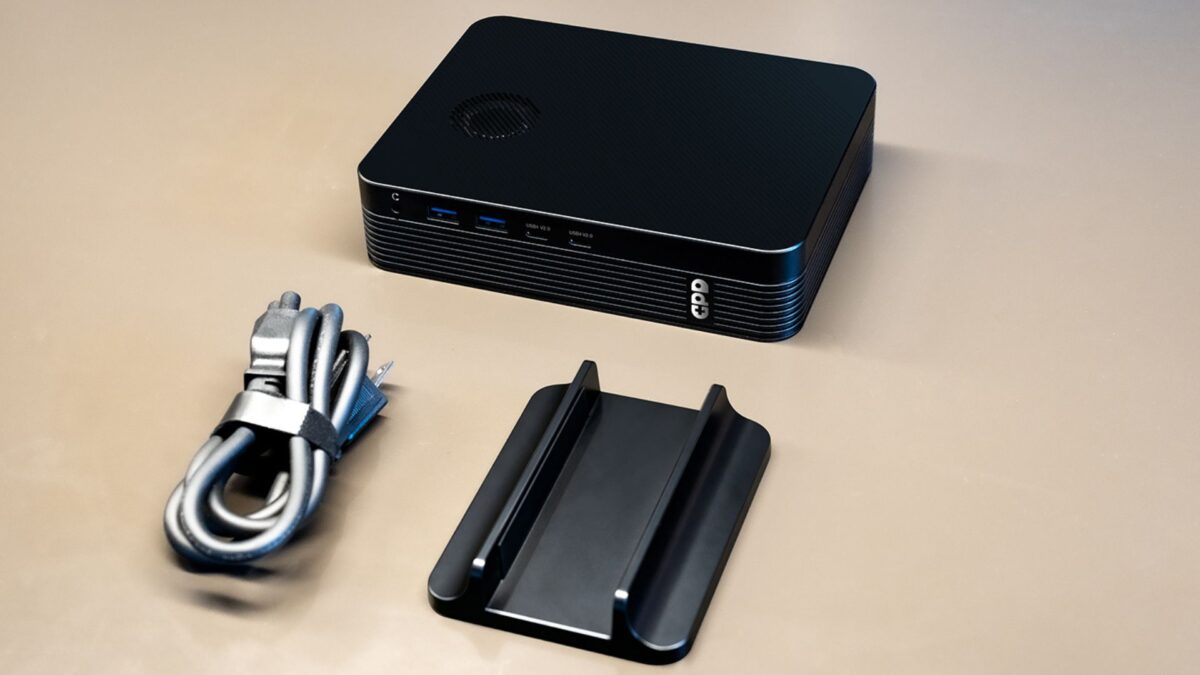
Dacă GPD BOX se comportă bine ca un desktop compact pentru utilizare zilnică, iar G2 oferă ceva apropiat de expansiunea în stil desktop promisă de GPD, perechea ar putea fi atractivă pentru gameri, creatori, dezvoltatori, utilizatori de laboratoare la domiciliu și utilizatori puternici care doresc un sistem flexibil fără a se muta direct la un turn de dimensiuni normale.
De asemenea, se potrivește perfect cu restul audienței GPD. Cumpărătorii care explorează deja categoria accesoriilor, a dispozitivelor portabile premium sau a sistemelor compacte GPD sunt exact genul de cititori cărora le pasă de o configurație care începe de la mici și crește ulterior.
Ce mai trebuie demonstrat
Chiar și cu fișele tehnice mai complete, există încă lacune importante. GPD nu a confirmat încă prețurile finale, calendarul de lansare sau disponibilitatea regională pentru niciunul dintre produsele din materialul analizat aici.
Mai important, cele mai mari întrebări rămase se referă acum mai degrabă la dovezi decât la specificații. Încă mai avem nevoie de un context de referință mai complet pentru afirmația RTX 4090 privind pierderea de 2% de pe GPD G2, mesajele mai largi privind suportul pentru clasa 4090 sau 5090 din jurul dock-ului, afirmațiile privind jocurile BOX de la 60 la 120 FPS, comparația Radeon 780M și limbajul de asociere RTX 5090 sau 5090D legat de GPD BOX.
Asta nu înseamnă că povestea hardware este slabă. În orice caz, actualizările specificațiilor fac conceptul mult mai ușor de luat în serios. Dar aceasta înseamnă că cititorii ar trebui să separe lista hardware confirmată de concluziile privind performanța, care necesită încă teste independente.
Pentru moment, anunțul funcționează cel mai bine ca o puternică declarație de intenție. GPD face clar faptul că dorește să concureze mai agresiv în domeniul calculatoarelor compacte de performanță, iar combinația GPD BOX plus GPD G2 este cel mai clar semn de până acum al modului în care intenționează să facă acest lucru.
Pentru toți cei care urmăresc deja evoluția recentă a GPD, această știre se află, de asemenea, în mod natural alături de reportaje precum GPD WIN 5 – Tot ce știm până acum. Factorul de formă poate fi diferit, dar mesajul de bază este familiar: hardware mic, ambiții mai mari.
ÎNTREBĂRI FRECVENTE
Ce este GPD G2?
GPD G2 este un dock eGPU pe care GPD îl descrie ca fiind primul dock eGPU cu două porturi MCIO din lume. Pagina sa oficială de specificații enumeră acum un slot PCIe Gen 5 x16, suport MCIO 8i pentru dispozitive PCIe Gen 4 x8, USB4 v2.0, două porturi USB-A, Gigabit Ethernet, un slot M.2 2280 și încărcare PD de până la 100W.
Ce este GPD BOX?
GPD BOX este un desktop compact Panther Lake recent anunțat, pe care GPD îl poziționează ca fiind primul său mini PC. GPD a listat opțiunile Core Ultra X7 358H și Core Ultra 7 356H, până la 64 GB memorie LPDDR5x, stocare duală M.2, MCIO 8i, USB4 v2.0 dual și lățime de bandă MCIO bidirecțională de până la 512 Gbps.
De ce este Panther Lake important pentru GPD BOX?
Panther Lake este important deoarece Intel îl poziționează ca o platformă modernă pentru AI PC-uri, dispozitive de jocuri și sisteme compacte. GPD a legat acum BOX-ul de două cipuri specifice Core Ultra Series 3, ceea ce face ca pachetul de performanță destinat mini PC-ului să fie mult mai clar.
GPD BOX poate fi asociat cu GPD G2?
Da. De fapt, această asociere este unul dintre punctele principale ale anunțului. GPD prezintă în mod explicit GPD BOX și GPD G2 ca o configurație combinată pentru un PC compact mult mai puternic pentru jocuri sau creație.
GPD a confirmat prețurile sau calendarul de lansare?
Nu, nu în materialul analizat aici. Prețul, calendarul de lansare și disponibilitatea regională trebuie încă confirmate.
Ar trebui ca revendicările RTX 4090, RTX 5090-class și BOX gaming să fie tratate ca fiind finale?
Nu, nu încă. GPD a publicat aceste afirmații, dar materialul de anunțare disponibil în prezent nu oferă metodologia de referință completă sau condițiile de testare necesare pentru a le verifica independent.




Questions & answers
1I am curious about the durability of the MCIO 8i port and connector used by GPD. If this solution were used in a future handheld (say GPD Win Max 3) would it be safe for frequent mating cycles?
Oculink ports and cables are typically rated for 250 cycles but there are very few reports of GPD oculink ports failing, so I assume GPD is sourcing their ports from a specialized manufacturer like amphenol. But as far as I can tell, such a manufacturer doesn’t exist for the MCIO 8i port.
We have the GPD BOX and G2 but unfortunately we cant test the MCIO port as its the 358H model that does not have the MCIO port. Once the GPD BOX 356H model is available we will be able to test the MCIO port on that one. Its not possible to say what the wear and tear is like on the MCIO port as a result. But I would imagine for the GPD BOX its not something you would be connecting and disconnecting very often as its a mini PC rather than a handheld.